








Kingdom of Night slipped under my radar when it was originally released on PC in December of 2025, despite being a game seemingly hand-crafted for my retro obsessed tastes. Sporting easy-to-understand RPG mechanics, exciting real-time combat, a moody pixelated world, and boasting a story which feels right at home in a campy 80’s horror movie, Kingdom of Night stands out as a great action-RPG that manages to elevate itself far beyond its simple premise. Unfortunately, it is also let down by its own ambition, which stretches the game’s length a bit further than it should, dulling its impact by its conclusion.
The game begins on an ordinary Friday afternoon in 1987, in the quaint town of Miami, AZ. A curfew has just been imposed on the town by the misleadingly named Friends of Safety (herein known as FoS) for, what they say, is the town’s safety after the mysterious disappearance of a popular local cheerleader in a dangerous mine. To nobody’s surprise, the town’s teenage population completely ignores this new protocol, opting instead to throw a party which is promptly shut down by the appearance of demons summoned by a satanic cult hell bent on unleashing Baphomet on the world.
By mere happenstance, you become the unlikely savior of the town and set out to take down the various demons holding the town hostage, rescue your unrequited love interest who has been kidnapped, and reunite various members of the doomed party at a dive bar in town which, somehow, appears to be the only place currently unaffected by the apocalypse outside its doors.
After a short introduction teaches you the basics of the gameplay and combat, Kingdom of Night launches you into the open-world of Miami, unhindered by anything except your skill in combat. Essentially all areas of this surprisingly dense map are available from the game’s outset, but strong enemies wander in packs in many areas, sure to deter all but the most fool-hardy of players during their early hours of exploration.
While there are clear goals to accomplish and a decent amount of side quests to complete, there is no set order to do so. Instead you are free to wander, unraveling the mystery of the town, the FoS, and taking down those behind the demon infestation at your own leisure. This lack of clear direction will almost certainly be a sticking point for some, while it will be a highlight for others. Personally, I appreciated uncovering the world on my own, taking random paths, meeting NPCs and helping them out, and risking it all to take down higher leveled enemies in hopes of scoring beneficial loot.
Unfortunately, even for those who like to explore, the detailed, but hard to navigate map will eventually become a burden, mainly due to the labyrinthine underground areas. No matter how hard you try to make a straight line to a quest objective, you will have to constantly backtrack through visited areas, most likely confused by the litany of branching paths available, all while fighting respawning mobs. As you’d expect, this does eventually grow tiresome. At first, this backtracking serves as a great way to help you level up, but eventually the mobs are so low leveled they become a nuisance instead. While there is a method of fast travel, it isn’t nearly robust enough to offset these issues and is cumbersome to utilize.
Kingdom of Night is an action focused RPG, and as such there is a never ending supply of loot found throughout the houses, sewers, buildings, and caves you can scavenge and from the enemies you’ll take down. Think Diablo, and you’ll have a pretty good idea of how much loot drops, though the attributes of said loot are nowhere near as intricate as Diablo‘s loot system. Loot is randomized, so you will never be sure if what you find will complement your play style. Early on, this helps push the player to experiment with different gear and weapons, and by the time your inventory is overflowing with gear, you’ll most likely have settled on a specific play style, helping you weed out gear that is not beneficial. No matter what playstyle you choose, you will almost certainly find gear good enough to ensure that you are well prepared for any of the threats you encounter.
The combat varies widely depending on if you choose to focus on melee or magic. Early on, you are given the opportunity to choose between five classes; barbarian, knight, rogue, necromancer, and sorcerer, each with their own pros and cons. Overall, melee tends to make the game easier, leaving you mainly to focus on basic swing attacks and various special attacks you receive as you level up. If you prefer more pizazz in your combat, you can instead opt to focus on magic, which is far more in-depth and forces the player to memorize a multitude of offensive and defensive spells. While it takes longer to perfect, magic will ultimately make your character a powerhouse, and provide a much more intricate moment-to-moment combat style. Despite the class chosen, every ten level ups allows you to swap into another specialty via an expansive skill tree, letting you ultimately mix and match abilities to suit your play style.
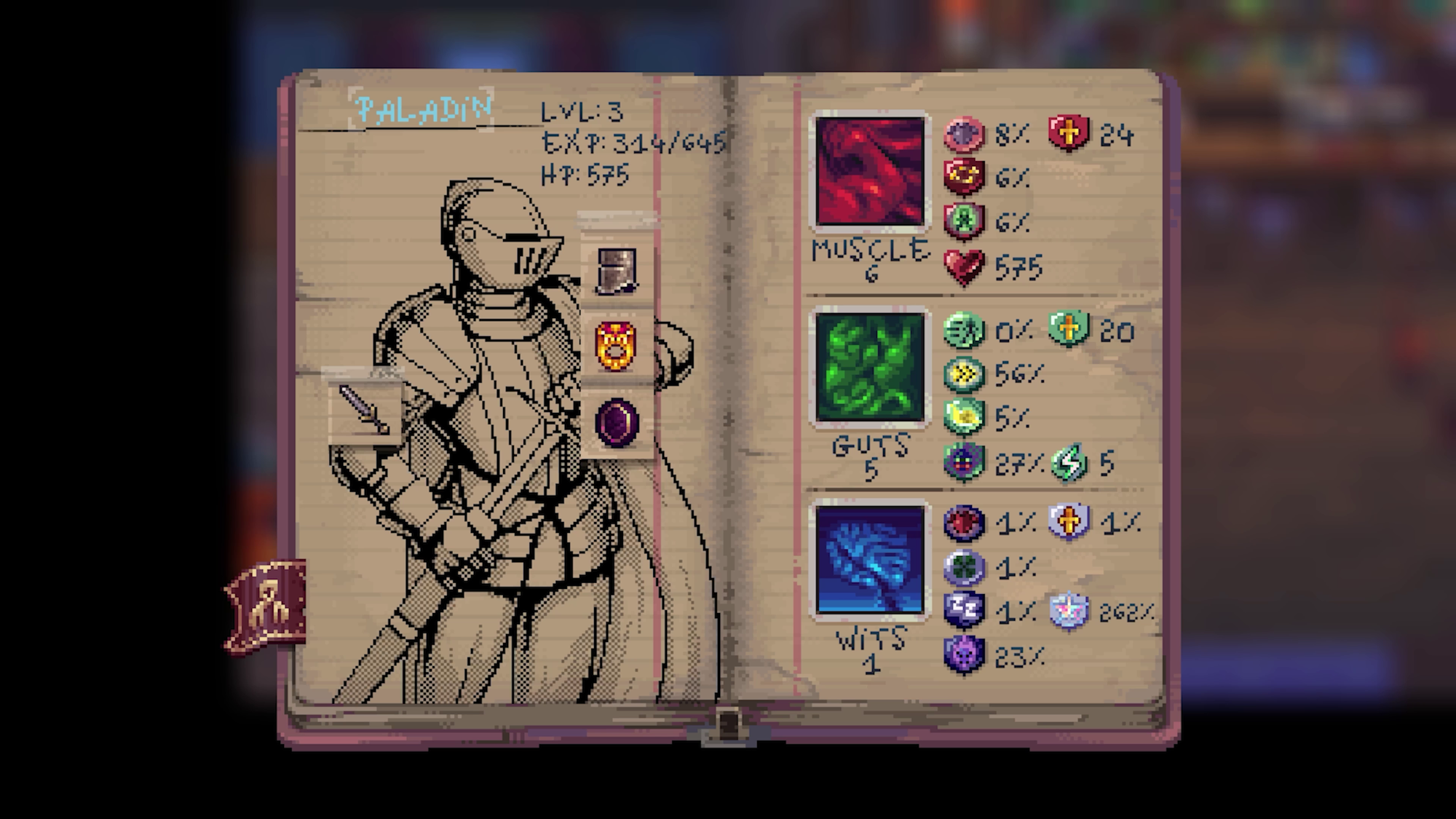
Further altering your abilities is a Muscle, Guts, and Wits system. Weapons, gear, and other items can raise or lower these attributes, and specific upgrades on the skill tree will as well. These attributes determine which weapons and gear are most compatible with your character, as well as whether or not you can participate in specific scenarios. Unlocking a door may require Wits +3, while breaking in the door may require Muscle +8. There are many encounters which will either be open or closed to you due to these attributes, but typically if you keep a large stock of gear on you then you can swap as needed to obtain the needed points to carry out a specific action.
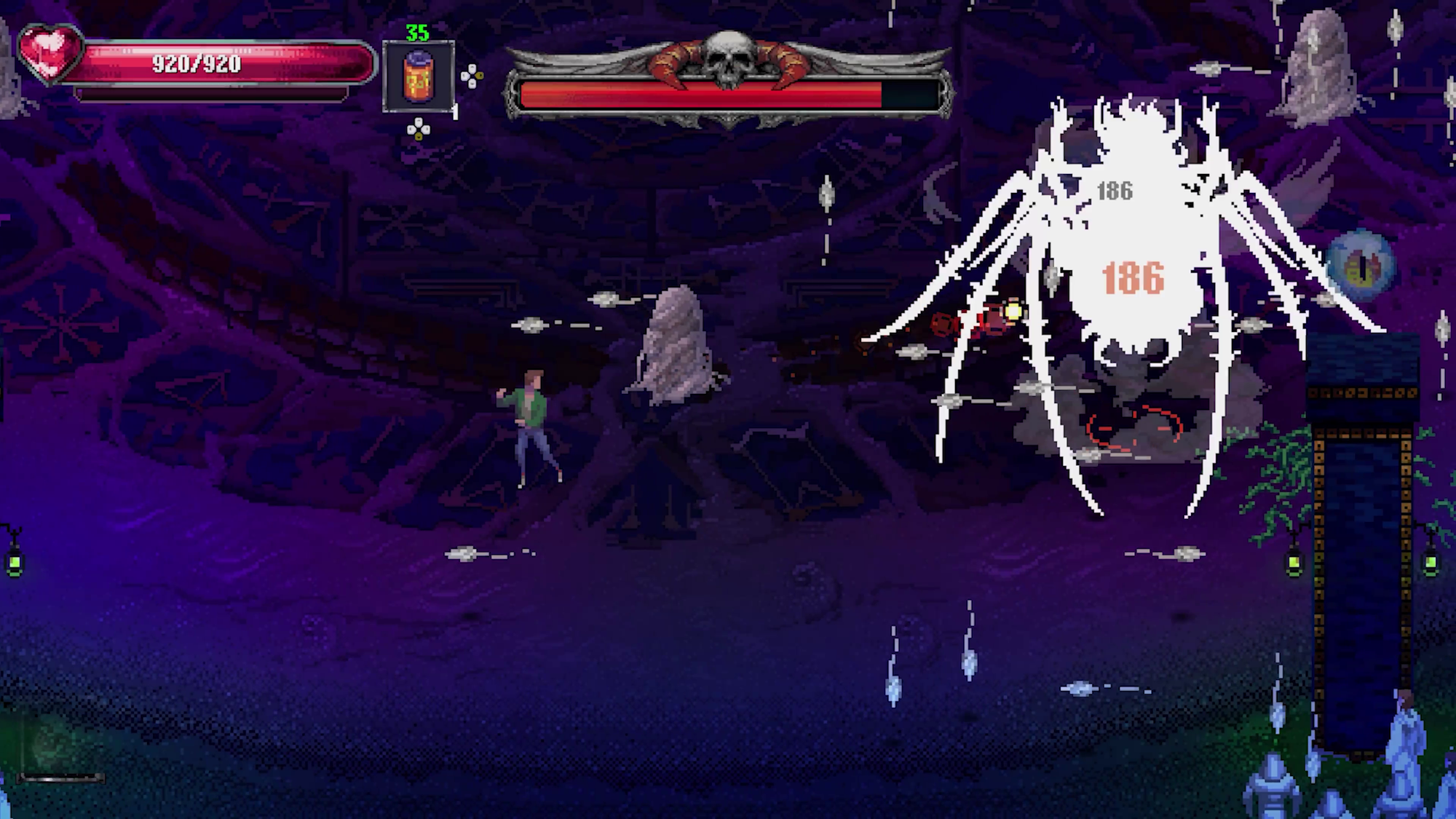
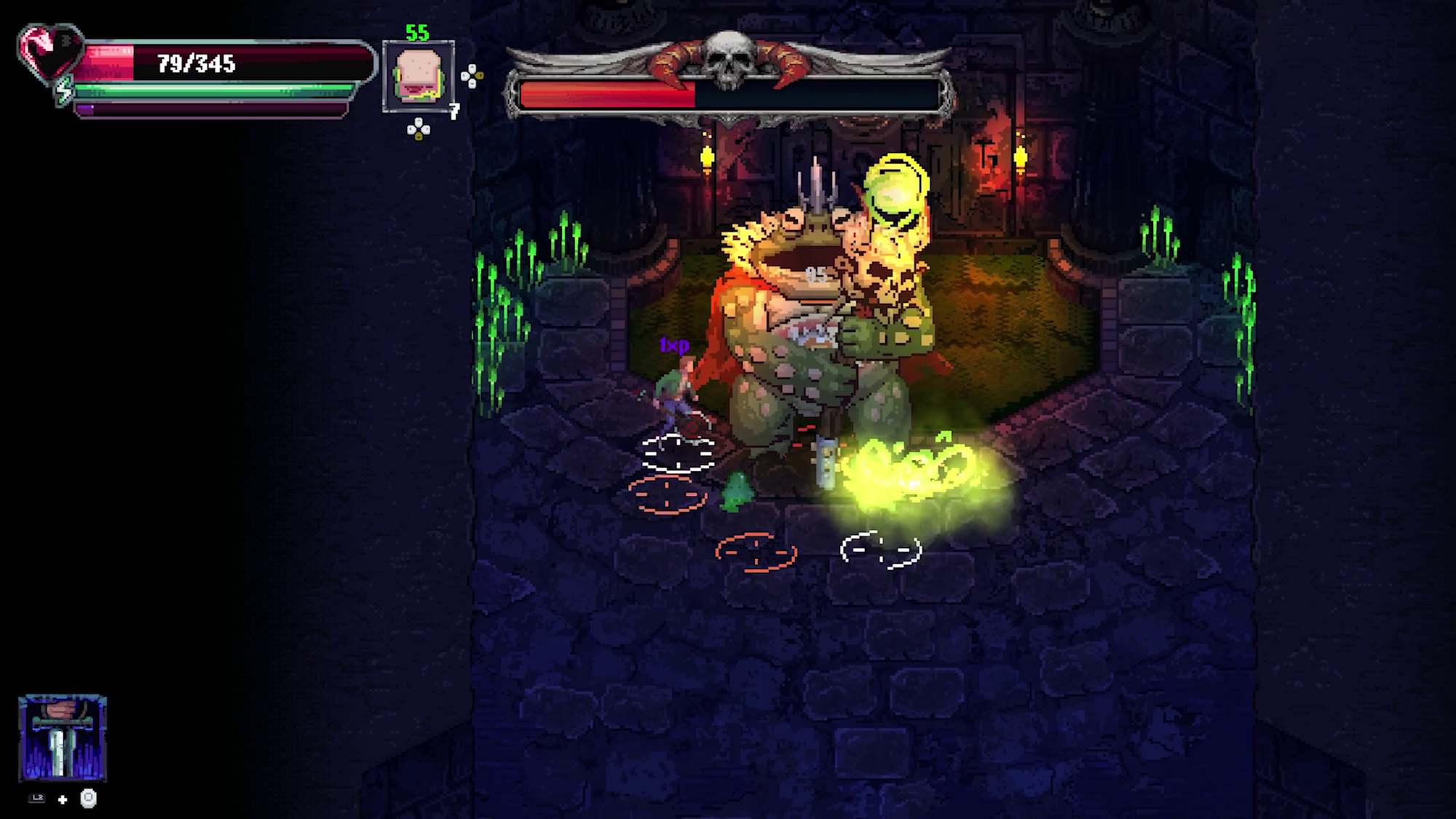
At its base setting, Kingdom of Night is rarely hard, though stumbling into high level mobs can quickly lead to a game over. Bosses are a different story, with many being capable of taking down even the most well-geared hero in a matter of seconds if they misstep. Despite this, their encounters never become frustrating, and instead quickly become one of the highlights of the game. Cain, and his battle atop a demon infested mall, stood out to me as a unique and satisfying fight.
The addition of couch co-op makes for a pleasant surprise, allowing for chaotic battles, especially when mixing melee and magic characters to absolutely obliterate any obstacle in your path. Co-op also helps alleviate the few issues I have with backtracking and respawning mobs, as it helps to counter the repetition that often occurs when traversing between quest objectives via already explored paths.
Review Guidelines
Great
Despite a few flaws, Kingdom of Night gripped me from its tense opening, and held my attention through the 15 or so hours it took me to complete. The retro aesthetic, satisfying combat, superb boss fights, large open world to explore, and interesting quests all combine to create a satisfyingly original retro inspired action-RPG, dripping with nostalgia for the 80s.
Pros
- Great 80s aesthetic
- Large world to explore
- Superb boss fights
- Great combat
Cons
- Backtracking
- Respawning enemies
This review is based on an early PS5 copy provided by the publisher. Kingdom of Night comes out on November 5, 2026.
Story via GamingTrend. Read the original article