



























When The Legend of Zelda: Ocarina of Time arrived in 1998, it did more than introduce one of Nintendo’s most beloved franchises to three-dimensional gaming. It helped establish the foundations of modern 3D action-adventure games, translating the exploration, puzzles and combat of earlier titles such as A Link to the Past into an entirely new kind of world. The transition was far from straightforward, demanding solutions to technical and design challenges that developers had barely encountered before. One of the most influential was Z-targeting, a system that allowed players to lock onto enemies and objects during combat and eventually became a standard feature across the industry.
Nearly three decades later, Nintendo has returned to the game that helped define a genre. The new remake, available exclusively for Nintendo Switch 2, rebuilds Hyrule with spectacular graphics, modernized controls and numerous quality-of-life improvements designed to eliminate the frustrations of the original. Yet beneath the technological overhaul lies a remarkably faithful recreation of the 1998 adventure. The question is whether the changes are enough to make Ocarina of Time feel revolutionary again, or whether time has finally caught up with one of gaming’s most celebrated classics.
We spent time exploring the rebuilt Hyrule, solving its familiar puzzles and revisiting its iconic locations to find out. The review copy was provided by Nintendo Israel.
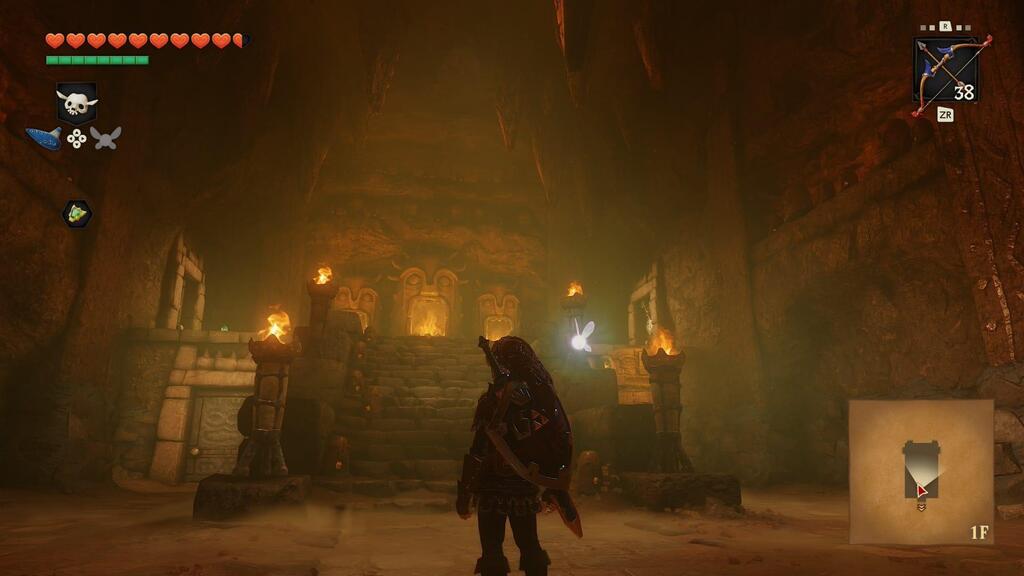
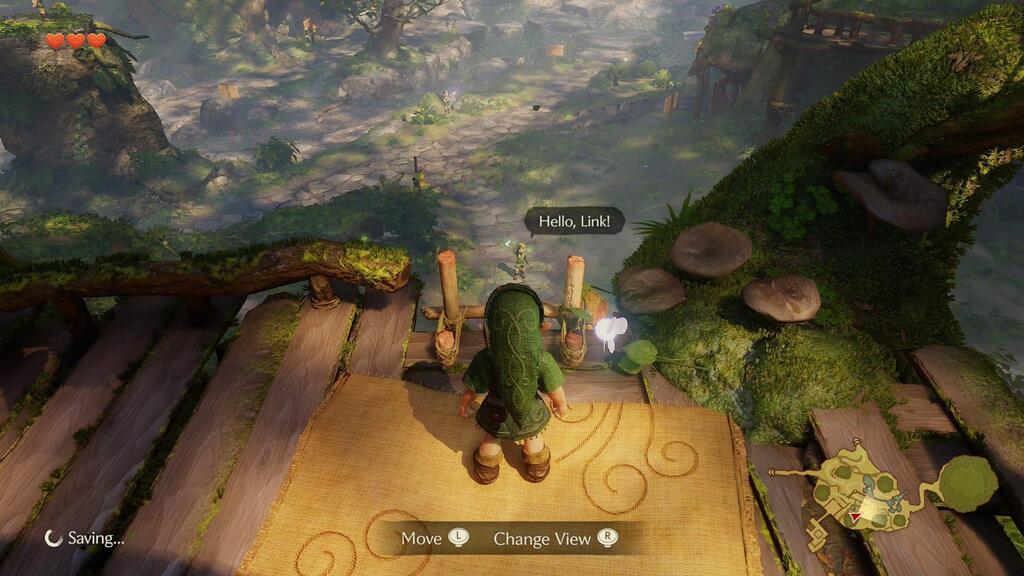
The visual transformation is immediately striking. Unlike the relatively restrained 2011 Nintendo 3DS version, this is a full-scale reconstruction that gives Ocarina of Time the appearance of a modern, big-budget release. Nintendo Switch 2 has been on the market for about a year, but this remake feels like the console’s true graphical showcase. Much as Demon’s Souls demonstrated the capabilities of PlayStation 5 at launch, the new Zelda offers a convincing glimpse of what Nintendo’s latest hardware can achieve.
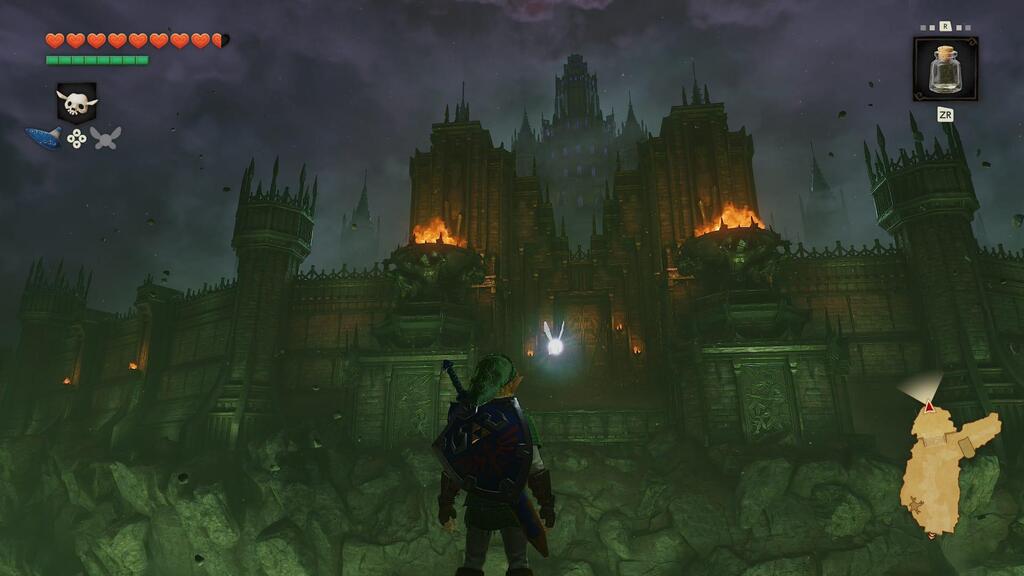
At first glance, the environments could easily be mistaken for something built in Unreal Engine 5. Rich textures, sophisticated lighting and extraordinarily detailed landscapes create a level of visual realism rarely associated with Nintendo’s games. The underlying technology appears to be an evolution of the engine used in Tears of the Kingdom, although the result looks and feels like a contemporary AAA production. More importantly, the presentation has a degree of polish that makes almost every corner of Hyrule worth stopping to admire.
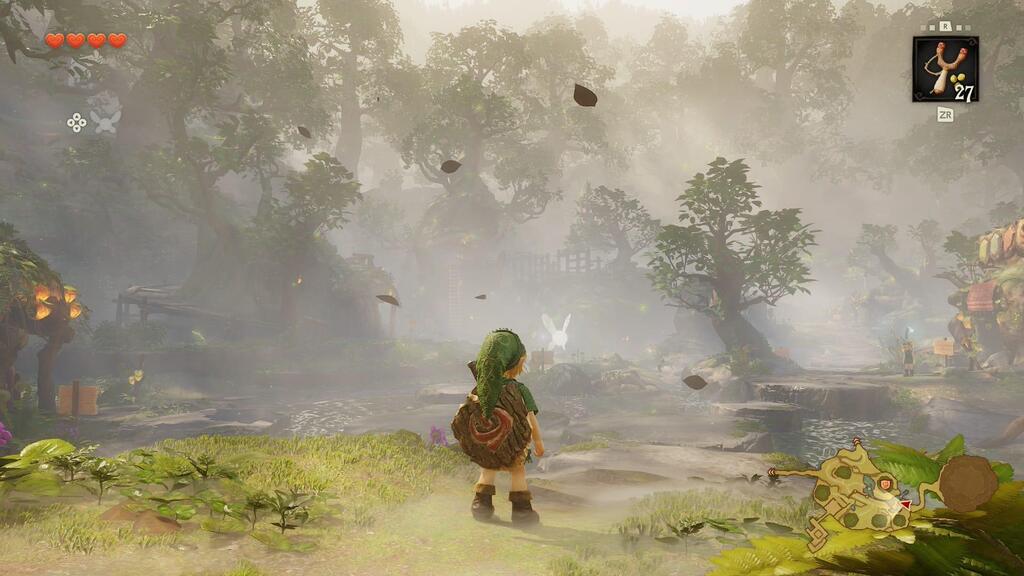
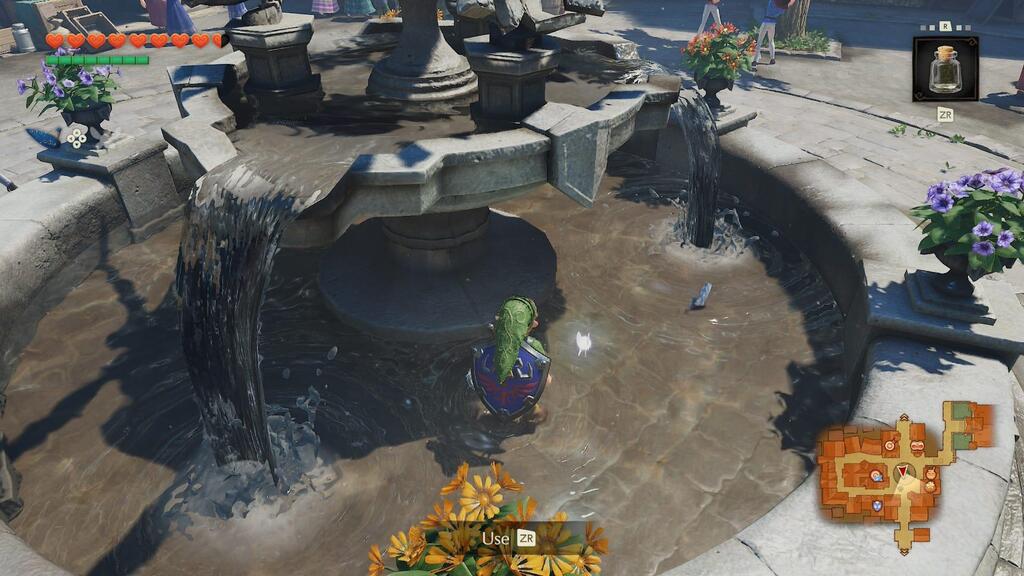
Lighting is arguably the remake’s greatest technical achievement. Metal reflects light differently from stone, polished surfaces respond differently from weathered wood, and fabrics and water have their own distinctive appearance. Shadows, reflections and subtle variations in how materials react to their surroundings give the world a remarkable sense of physical presence. The textures are equally impressive, with sharply defined surfaces and details that sometimes approach photorealism.
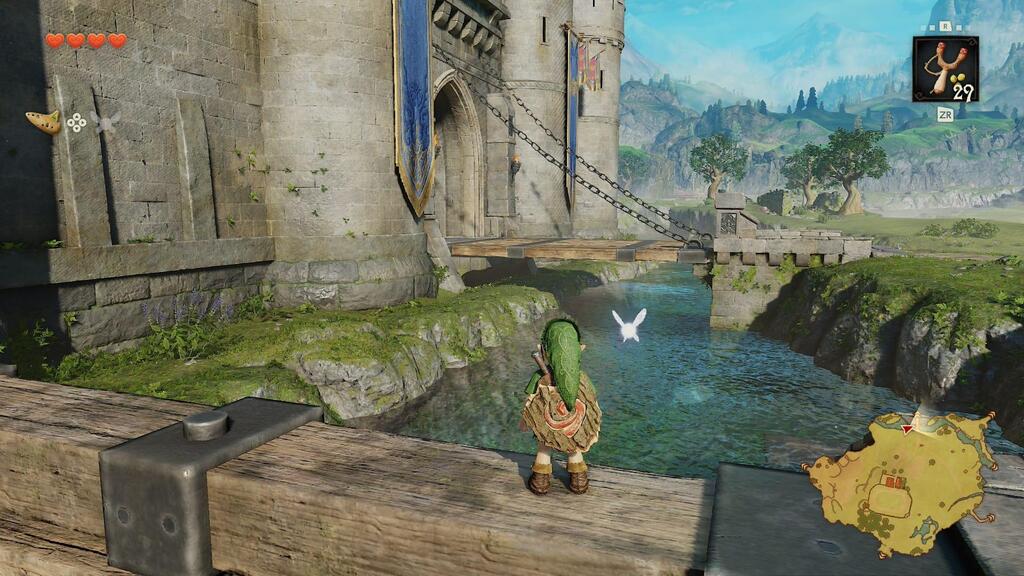
But what makes the remake visually successful is not simply its pursuit of realism. Nintendo has found a compelling balance between believable environments and the stylized characters and architecture that give Zelda its distinctive personality. The landscapes can look almost lifelike, while the characters retain the expressive, animated quality of a modern 3D film. The combination feels coherent rather than contradictory, preserving the artistic identity of the original while making it considerably richer.
(Screenshot: Daniela Ginzburg)
(Screenshot: Daniela Ginzburg)
(Screenshot: Daniela Ginzburg)
Nowhere is that balance more apparent than in the natural environments. Trees, grass, rocks and soil have an astonishing level of detail, yet the world never loses the playful visual language that has defined the series for decades. The picturesque houses scattered across Hyrule’s villages, for example, still look like something from an animated fantasy film, even as the surrounding landscape becomes much more realistic.
The attention to environmental effects is equally remarkable. In the Lost Woods, thick fog hangs between the trees while vegetation reacts to Link’s movements, creating an atmosphere that feels both mysterious and alive. Even previously barren locations, particularly the enormous open spaces of Hyrule Field, have been transformed. Where hardware limitations once left expanses of mostly empty ground, there are now trees, plants and countless small environmental details that make the landscape far more convincing.
There is, however, an important distinction between making a world look more alive and giving players more to do in it. Despite the visual overhaul, Nintendo has not significantly expanded the original maps with new activities, discoveries or points of interest. The locations are more beautiful than ever, but their underlying design remains relatively simple. That faithfulness is understandable, yet after experiencing the extraordinary freedom and interactivity of Tears of the Kingdom, it is difficult not to wish the rebuilt Hyrule offered a little more to explore.
Perhaps most impressively, the game maintains a frame rate of 60 frames per second despite its substantially improved visuals. Achieving that performance appears to have required some compromises, particularly in rendering resolution and image sharpness. Occasional jagged edges and a slightly soft image are noticeable, especially in certain environments. They take some getting used to, but they do little to diminish an otherwise extraordinary visual achievement.
For all the changes to its presentation, Ocarina of Time remains fundamentally the same adventure. Its dungeons, puzzles and combat encounters have been preserved with relatively few major alterations. Some dungeon layouts have received minor adjustments to make navigation easier, dialogue has been refined, and objects or clues that were once difficult to notice are now more clearly signposted. Individually, these changes may seem insignificant, but together they make the adventure considerably more approachable, particularly for players discovering the game for the first time.
The biggest improvements are found in the moment-to-moment experience, especially the way Link moves and interacts with the world. His controls have been extensively redesigned, bringing them much closer to the responsiveness of Tears of the Kingdom than the sometimes cumbersome movement of the 1998 original. It is an important change, because although Ocarina of Time was exceptionally polished for its era, returning to the Nintendo 64 version today requires considerable patience.
Loading screens interrupting every visit to a shop, a camera that cannot be freely rotated, automatic jumping without direct player control and numerous other limitations once seemed perfectly reasonable. Nearly three decades later, they can make the original adventure feel surprisingly slow and restrictive. The remake does away with many of these frustrations without fundamentally changing how the game is designed.
Link can now jump whenever the player chooses, sprint to move faster and freely rotate the camera to explore the surroundings. His movement is so fluid and satisfying that simply running around Hyrule becomes enjoyable in its own right. The new animations are noticeably more natural and dynamic, lending even ordinary actions a sense of physicality and responsiveness that the original could never achieve.
(Screenshot: Daniela Ginzburg)
(Screenshot: Daniela Ginzburg)
Smaller changes are equally welcome. Climbing ladders and getting off them is faster, while entering buildings no longer requires sitting through a black loading screen that breaks the flow of exploration. Shops can now be entered seamlessly, and characters can move in and out of them in real time. These details might not sound revolutionary, but they help make Hyrule feel like a connected, living world rather than a collection of separate locations.
Inventory management has also received a much-needed overhaul. Instead of repeatedly opening menus to assign items to different buttons, players can quickly select weapons and tools through a dedicated interface similar to those found in modern games. Motion controls provide another useful addition, allowing players to aim ranged weapons using the console’s gyroscope. Both improvements make common actions more convenient and remove much of the unnecessary friction from the original experience.
Taken together, these changes accomplish something that a simple graphical upgrade never could. They strip away the technical limitations and awkward design conventions that have accumulated around Ocarina of Time over the years, allowing its underlying gameplay to shine again. Rather than redesigning the adventure around modern expectations, Nintendo has made it easier to appreciate what was already there.
That does not mean the gameplay remains as groundbreaking as it was in 1998. The series has evolved enormously since then, particularly with Breath of the Wild and Tears of the Kingdom, which expanded exploration, player freedom and environmental interaction to levels that would have been unimaginable when Ocarina of Time first appeared. Compared with those games, the older adventure can feel limited in both scope and complexity.
And yet, the classic Zelda formula remains remarkably effective. The satisfaction of discovering a new tool, learning how it works and gradually understanding how it can unlock previously inaccessible areas has lost none of its appeal. The game introduces its mechanics patiently, building connections between exploration, combat and puzzle-solving until every new ability feels meaningful. It was a successful formula long before 1998, and it still works beautifully today.
This is ultimately the remake’s greatest success. With smoother controls and a more natural flow, Ocarina of Time no longer feels like a masterpiece that must be approached with allowances for its age. It is simply an excellent adventure game, one that can still stand on its own merits even if it no longer has the power to redefine an entire genre.
Nintendo has also given the soundtrack an extensive overhaul, replacing the original MIDI arrangements with lush orchestral recordings. The familiar melodies have never sounded better. Instruments have greater depth, the compositions feel fuller, and the music benefits from a richness that was impossible to achieve with the audio technology of the Nintendo 64.
What makes the soundtrack particularly impressive is that the improvements go beyond recording quality. The arrangements themselves are exceptionally well handled, breathing new life into melodies that many players have known by heart for decades. Nearly every piece feels richer and more expressive than its original counterpart, yet the music retains the personality and emotional character that made it memorable in the first place.
The storytelling has received a more restrained but equally welcome update. Some of the original’s simpler dialogue sequences have been replaced with fully animated, voiced cutscenes. There are not many of them, but they appear at carefully chosen moments, giving the narrative a more cinematic quality without overwhelming the game’s familiar structure. It is a smart compromise between preserving the storytelling style of the original and meeting modern expectations.
As for the performances, the English voice acting is generally good, although the quality varies noticeably between characters and scenes. The Japanese voice track is more consistent and, overall, delivers stronger performances. Both options are perfectly serviceable, but the Japanese version is the better choice for players who want the most polished presentation.
(Screenshot: Daniela Ginzburg)
From both a technical and artistic perspective, The Legend of Zelda: Ocarina of Time may be Nintendo’s most visually impressive game to date. This is far more than a polished re-release. The developers have rebuilt a familiar world with extraordinary care, transforming its appearance while retaining the personality that made it special. More importantly, the improvements to movement, controls and overall responsiveness have made the adventure genuinely enjoyable by modern standards, rather than merely preserving it as a historical curiosity.
Still, the remake is undeniably conservative. Its gorgeous world does not offer the freedom or depth of modern Zelda games, and its familiar gameplay structure no longer represents the cutting edge of game design. But that is also part of its appeal. Ocarina of Time proves that great game design can survive the passage of decades, especially when the technology surrounding it is brought up to date. After playing this remake, it is difficult not to imagine what Nintendo might accomplish by combining its classic dungeon-driven adventures and spectacular new visual style with the expansive, interactive worlds of Tears of the Kingdom. If that is the direction the series takes next, its future could be even more exciting than its past.
Story via Ynetnews. Read the original article