

















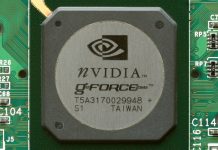












The most important thing to consider in the midst of all of this, from a PC Perspective (get it?), is the future of GeForce. Consider the following: A GPU in the RTX 5080 class (~400 mm^2), produced on a leading edge node at TSMC, has a cost of around $235 (source: SiliconAnalysts). If this goes into a GeForce card, it has an imaginary MSRP of $999 USD. If it goes into an AI accelerator card it would obviously command much, much more. (Somehow there isn’t an AI accelerator based on GB203 yet?)
Do you, dear reader, really believe that NVIDIA, no longer under the control of Jensen Huang, will look at their R&D budget, look at gaming margins vs. data center, and still offer consumer gaming products? It makes zero sense from a business perspective. Jensen – like it or not – was proud of NVIDIA’s history with consumer 3D graphics and seemed to like being on top of the gaming world.
Of course RTX cards make NVIDIA money, but those $18,000 – $20,000 leading-edge TSMC wafers could be put to better use if margins are the only thing the company cares about going forward. Does Colette Kress (previously a finance executive at TI, Microsoft, and Cisco), have an affinity for PC gamers and their need for GPUs? Will the next CEO?
Lisa Su now says “AMD is a data center first company”. Intel could very well be done with their consumer Arc GPU experiment (outside of integrated graphics), and we don’t have any other options right now. Where is the next 3dfx? Will someone license some IP and start producing consumer GPUs once foundry capacity eases from current levels? Will we finally be forced move to ARM on desktop after all of this happens?
Another question: was the “artificial” in “AI” referring to scarcity, all along?
Story via Pcper. Read the original article