











Atlus is the studio behind the Shin Megami Tensei and Persona series, with the latter being extremely well-received and very popular. In recent years, Atlus was busy remaking popular Persona titles, but one brand-new game emerged from the Atlus labs in 2024: Metaphor: ReFantazio. Originally only available on PlayStation 4 and 5, Xbox Series X/S and Windows, finally in 2026, Metaphor: ReFantazio is also available for Nintendo Switch 2.
Perhaps expecting a Persona game is a bit too ambitious. After all, Metaphor: ReFantazio was meant to be something totally different. However, this does mean that it may not appeal to Persona players at all.

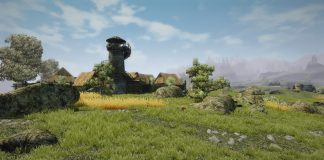
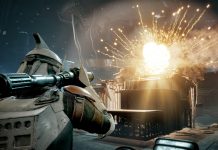
Let’s start with the good stuff. The game runs decently well on Switch 2, although at times the loading animations jittered a little. It’s nothing game-breaking, however. Overall, ReFantazio looks very decent, both in handheld and TV mode. In this sense, it is 100% playable and enjoyable in the same way as it is on PlayStation 5. Sound is great, with amazing voice acting and a booming soundtrack that screams “FANTASY!”
Unfortunately, Metaphor: ReFantazio leaves a few things to be desired. Perhaps comparing it to Persona titles is a bit unfair, but considering the similar battle – and relationship – styles, it’s just impossible not to contrast. Overall, whereas Persona titles feel very smooth and slick when playing, the experience in Metaphor: ReFantazio is the opposite. Everything feels a bit more clunky, almost less refined. Battles take a long time and become tiresome quickly, which is a danger with turn-based battle systems, but a danger that was thwarted in Persona titles very well, and not well at all in Metaphor: ReFantazio.

Then there is the very long intro segment before getting properly started. Again, this is not unusual for Atlus’ titles, however in Metaphor: ReFantazio it feels overwhelming and like a long info-dumping process. Players are immediately confronted with basically the whole story; there is no step by step introduction like in Persona games. It’s not slow burning story-wise, it’s an explosion of information, and it’s confusing.
The language used here does not help at all. Going with the fantasy theme, the terminology is convoluted and difficult to understand, especially for non-native English speakers, making it difficult to follow tutorials and understand the systems. Inventing new terms for systems known from Persona under different names just adds to the confusion.
On top of all of this is the extreme sensory overload. There is simply too much going on on screen at any given time. Little animations around the text boxes, the camera softly swaying from side to side, conversation text at the bottom and comments in the top corner… these are just some examples. Everything on screen seems to be moving, and not in a good, organised way. Playing feels overwhelming, it is impossible to know what to pay attention to, especially at the start. Later on all these small animations get annoying. There is no way to turn them off either.

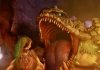
Coming to the dungeons and battles, these are not well balanced at all. For players who are used to fairly linear dungeons in the Persona series, the Metaphor: ReFantazio dungeons are anything but. This would be fine if the enemy encounters were not so frequent and took so long! Instead of individual shadows creeping along, here the enemies appear as they are. They can individually be attacked, and if the player is at a higher level than the enemy, will simply die in one hit; no battle needed.
However, this is of course rarely the case, and so players may find themselves being constantly on edge, misjudging how many enemies will actually enter into the turn-based part of the battle, and then battling for a very long time before immediately entering the next one. There is a simple balance missing, and it feels that a decision between an action and turn-based style could not be reached and was compromised on with the worst possible result.
Story-wise, there is something here for sure. The characters and the world are interesting, the story intriguing (if it had not been mostly given away at the very start already!). Because of this, storytelling itself could have just been paced a little better. After going through the intro, the plot left little incentive to continue playing. There seem to be no new secrets to be discovered, no mysteries to solve; in fact, the path ahead is very clear and straightforward. The story itself is good; it is just a shame all the secrets are essentially revealed right at the start.

Story via Cubed3. Read the original article