




















_2-218x150.jpg "Make The Call: Football Manager 27 is live across platforms")





In a lot of ways, the remake of The Legend of Zelda: Ocarina of Time feels like a flex: the amount of confidence it probably took to take a 1998 game, and release it nearly 30 years later pretty much as-is is probably staggering.
The late 1990s represent the formative dawn of the 3D gaming era, and a lot of the blueprints for modern 3D games were laid down then. To therefore take a game that was there right at the start – that, in fact, was one of the most significant of the games doing the aforementioned laying down of design principles followed to this day – and release it without making many (or frankly, nearly any) changes to the core design and mechanics represents either a startling degree of confidence, or hubris of the highest order.
“The late 1990s represent the formative dawn of the 3D gaming era, and a lot of the blueprints for modern 3D games were laid down then.”
After all, in the nearly three decades since, video games have come such a long way. Controlling a camera or a character in a three dimensional space has long since become standardized, storytelling and cinematics have evolved greatly since the original Ocarina of Time pioneered cinematic storytelling in games, and 3D world and level design have had a chance to iterate and build on the principles the Ocarina of Time codified.
Would keeping the core design and mechanical skeleton of the game the same as the original, all this time later, not lead to the game feeling a bit… barebones, then? Particularly in the modern context, with massive open worlds and hundred hour campaigns, something even the Zelda series itself has embraced over the last decade, would Ocarina of Time really hold up? Would it still feel like the apex of game design that it once did, all that time ago?
That’s why I called this remake a flex – because that’s precisely what Nintendo did, and incredibly, somehow, they pulled it off. In remaking The Legend of Zelda: Ocarina of Time in the way they did – where the core design and mechanics are kept nearly identical, but the graphics, presentation, production, and polish are all updated to a modern AAA game’s standards – they have demonstrated that great game design and mechanics simply do not age. It outright does not seem to matter that Ocarina of Time is one of the formative 3D action adventure games, and that there have been nearly three decades of evolution in game design since then.
This remake demonstrates that the core design and mechanics of the original game were so impeccable, so incredible, so unimpeachable, that in spite of Ocarina of Time 2026 retaining them pretty much as is, this still feels like a top tier title today, on par with, if not outright better than, most of the cream of the crop that is released even today.
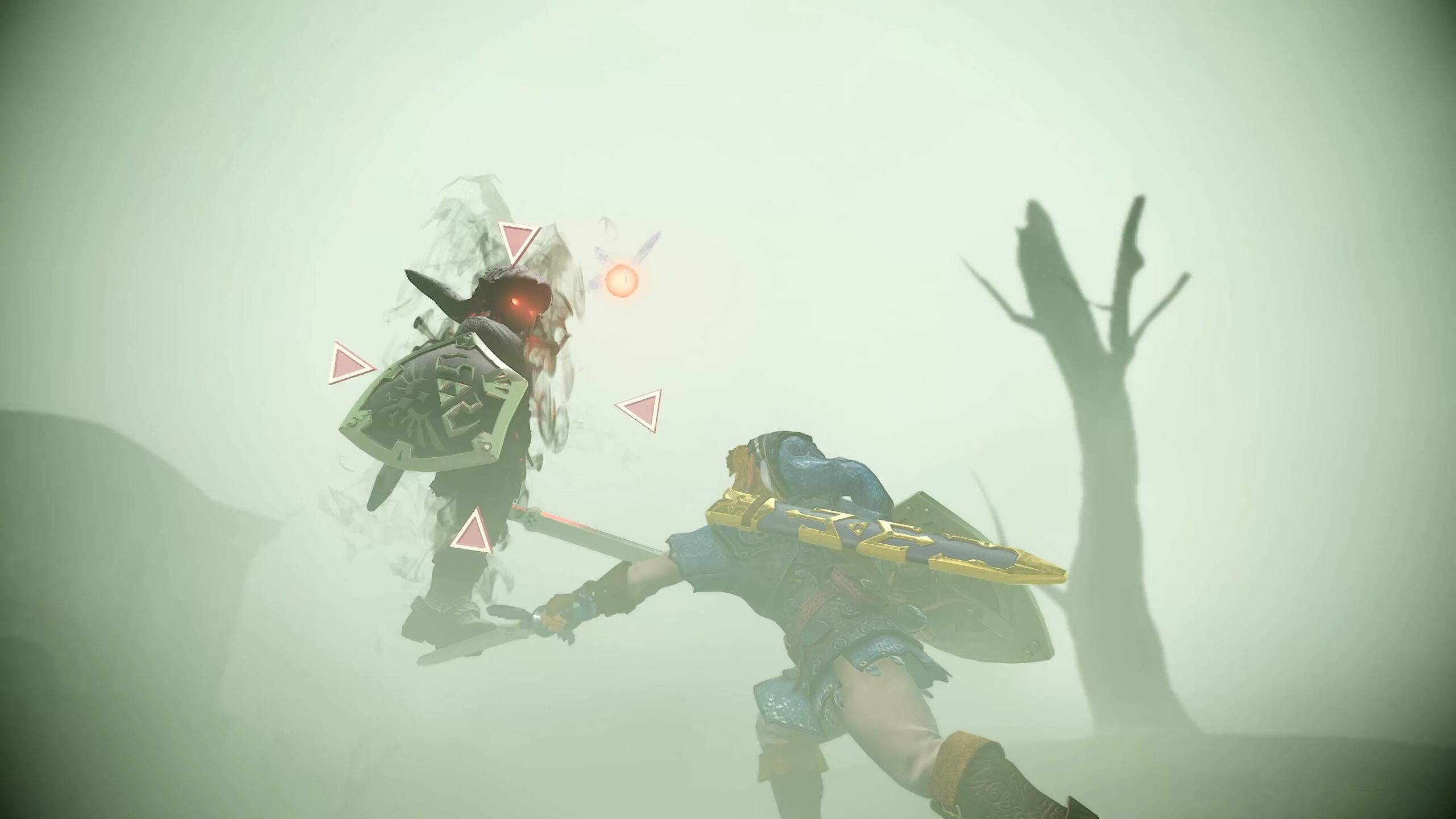
“The original Ocarina of Time is an incredibly well designed and playing title.”
In a way, this is unsurprising: even today, the original Ocarina of Time is an incredibly well designed and playing title. Any problems it has had with picking up new players owing to its age have been more down to its graphics and visuals, the jank inherent to any old game, and particularly one that was trying so many things we now take for granted for quite literally the very first time, its by now fairly aged storytelling, and to a lack of modern QoL and standards.
The actual core game and story have always been great and largely beyond reproach. So it makes perfect sense that the remake has instead chosen to focus on what the “flaws” of Ocarina of Time have been, so to say, at least in a modern context.
Even the relative leanness of the original adventure feels like a strength with this remake. Rather than expanding on the original game, Nintendo chose to keep it as is – and this leads to a very tightly designed, fantastically paced adventure that feels like a refreshing and brisk change of pace from the bloat that often typifies modern AAA storytelling and game design.
Ocarina of Time takes exactly the amount of time it needs to take to experiment with a game mechanic, or flesh out a design principle, or delivering a story beat – and then moves on, rather than risking anything outstaying its welcome. Things are always moving in Ocarina of Time at a brisk pace, and the game feels incredibly well structured as a result. The original Ocarina of Time has often been called one of the best paced games of all time, and Nintendo absolutely made the right choice in not messing with that pacing much at all.
But on the other hand, they exhibited very little restraint when it comes to updating the graphics, music, sound design, and overall presentation. For a very long time, now, Nintendo’s developers have been constrained by weaker hardware; the Switch 2 is the very first time in nearly two decades that Nintendo has had anything close to modern hardware, and it feels like the shackles have been taken off of these very talented developers and creatives, because the visual design of Ocarina of Time 2026 is entirely unlike anything Nintendo itself has attempted in a very, very long time.
This is a game that has eschewed the stylized, more cel shaded style visuals that Nintendo has opted for more and more over the last decade or so, instead opting for something that seems very hyper-detailed and, while not photorealistic, definitely leaning far more in that direction than anything else Nintendo has done.
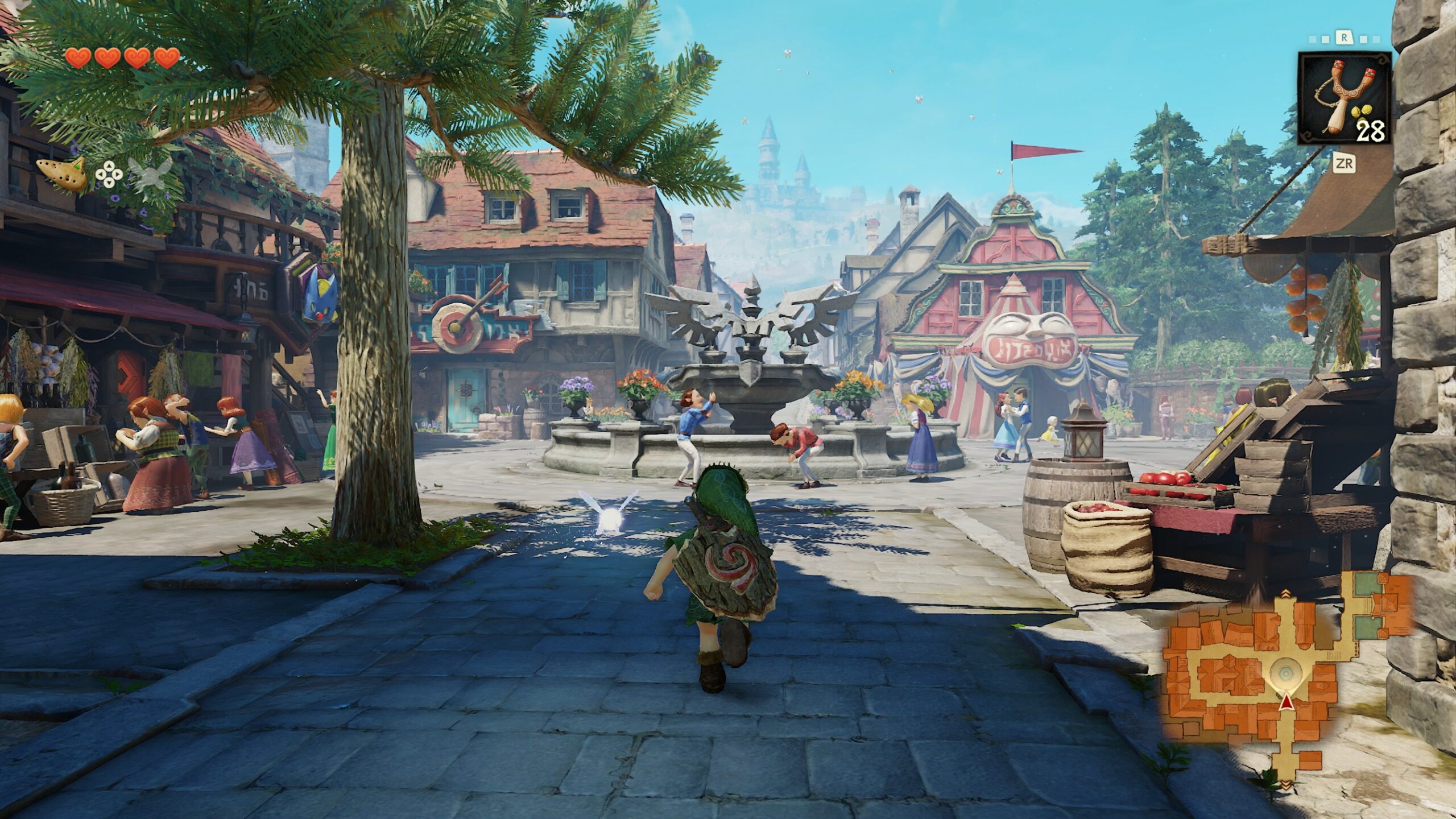
“On the other hand, they exhibited very little restraint when it comes to updating the graphics, music, sound design, and overall presentation.”
The graphics need to be seen in motion to be believed. While I do think that the aesthetic can be a shock initially, and that some parts of it definitely stick out more than the others, overall, the game looks absolutely stunning. The amount of attention to detail in every aspect of the graphics is beyond anything we have seen Nintendo do in a very long time. Nintendo has always been a developer that pays a nearly obsessive amount of attention to detail, both big and small.
It is a joy to see them extend that philosophy to not just the game’s mechanics, but also the visuals and presentation – be it in the way everything in the world seems to react with physics based properties (the fluid dynamics of the fog, in particular, are incredibly impressive) to the new dynamic lighting system, or the little flourishes added to the animations, this is without question the best looking game Nintendo has ever made – but equally importantly, this is an incredibly respectful realization of the vision of the original Ocarina of Time in the modern context.
The tone, aesthetic, and vibe that the original game was going for seems to always be retained by Ocarina 2026, only now lovingly rendered with some of the most visually striking graphics. The original Ocarina of Time was a technical showcase, and had a sense of grandeur inherent to the overall production – all of that is retained with this remake. Nintendo did not skimp out with the budget or production. They understood the significance of the original game, and what statement remaking it sends. It would not surprise me if this was one of the highest budget productions in the company’s history, in fact.
Updated alongside the graphics is the performance, which in the original game was, well, roughly 20 frames per second. This was… not ideal, even back then, but especially over time, has made it incredibly unpleasant and janky to go back to. Even the 3DS remaster which released 15 years ago only managed a locked 30 frames per second. This version of Ocarina, on the other hand, is a locked 60 frames per second, leading to a game that feels incredibly fluid, brisk, and responsive to play in a way that Ocarina of Time literally never has.
Paired with some incredible audiovisual feedback – from the hitstun to the sound effects when your attacks connect – Ocarina of Time feels like a joy to play with this remake. The controls are direct, and immediate, and and the updates made – from the direct camera control on the right analog stick to the addition of the jump button – all make the game feel incredibly dynamic and vibrant.
What really stood out to me in this remake of Ocarina of Time, personally, was the incredible glow up in the standards of storytelling that Nintendo seems to be capable of. Storytelling is not really something you associate with Nintendo or Nintendo games much. Even the Zelda games, which are the closest to a typical modern AAA production that Nintendo has, eschew the sort of storytelling excess that has led to the sort of escalated budgets that typify many western AAA games now.
With the Ocarina remake, however, Nintendo has definitely gone further and beyond with their storytelling chops than they ever have before. There are a lot more voiced cutscenes, the actual voice acting is significantly better than anything the Zelda franchise has had so far, the actual cinematography and frame composition is a lot more dynamic and impactful than the staid talking head with subtitle style they have largely used until now, and the writing feels a lot more natural and organic as well. It helps that Ocarina of Time has always been one of Nintendo’s best and most nuanced stories.
This is, obviously, not a story that’s meant to have the heft or pathos of something like Red Dead Redemption 2 or The Last of Us; Ocarina of Time, instead, is a fairy tale, a fairy tale that does get surprisingly dark and distressing a lot of the time, but a fairy tale nonetheless. But even fairy tales deserve top tier storytelling – and with Ocarina of Time, Nintendo has delivered their best attempt at modern AAA game storytelling yet.
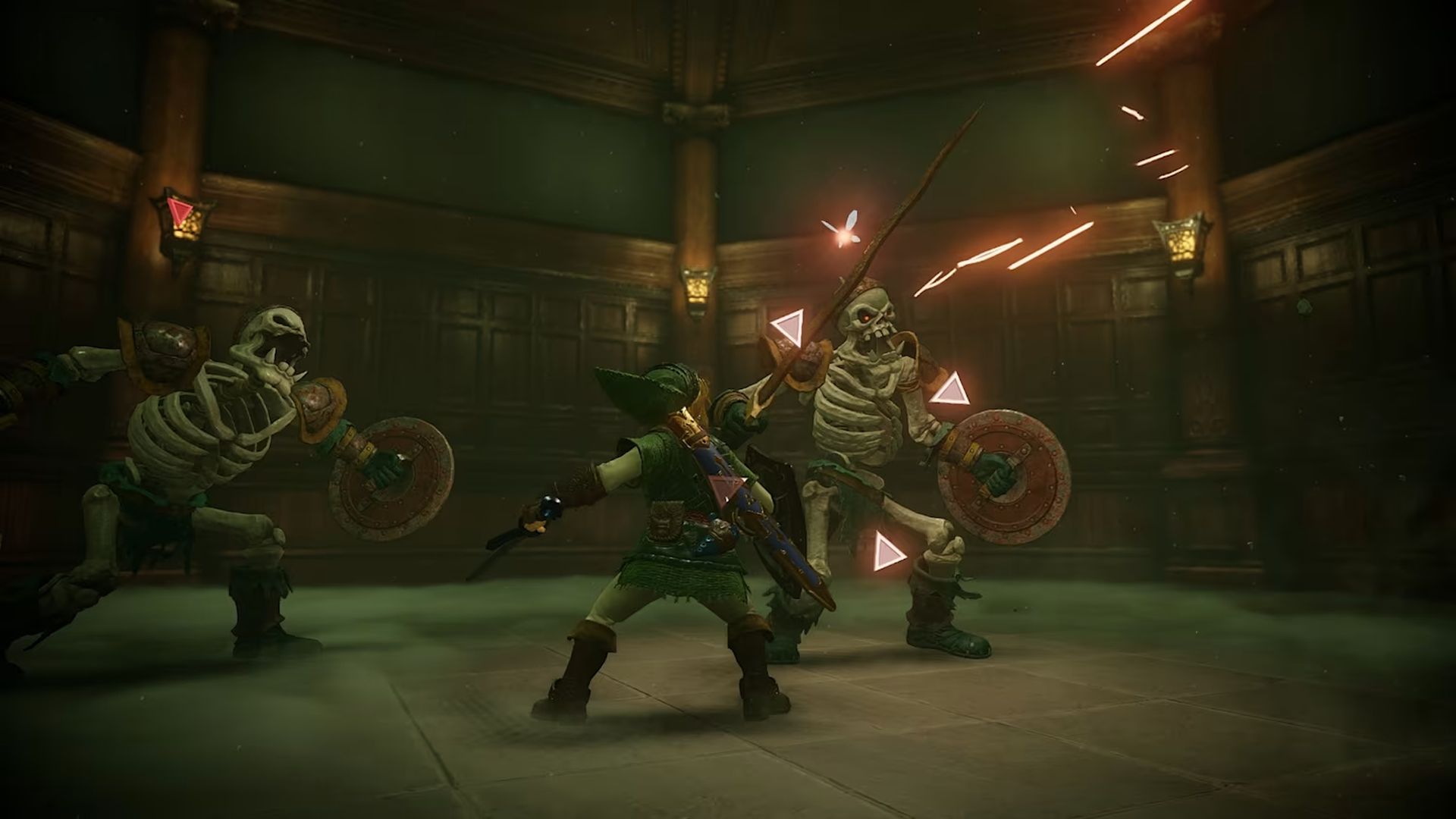
“What really stood out to me in this remake of Ocarina of Time, personally, was the incredible glow up in the standards of storytelling that Nintendo seems to be capable of”
A huge part of Ocarina of Time’s story hitting the way it does has always been the music. The Zelda franchise has always been at the forefront of video game music, and using it in storytelling and gameplay alike, and perhaps the best synthesis of that philosophy was the original Ocarina of Time.
The remake retains that, updating the original dynamic soundtrack with a full orchestral suite, with every single track updated with modern live renditions (rather than the MIDI the original game used), and with several newer tracks added to boot. Those new tracks are largely new variations of existing tracks rather than entirely new ones – I don’t want to spoil anything, but one of the ones that stood out to me was the night time Kokiri Forest theme – but again, they only serve to supplement and flesh out the vision of the original game, rendered with all the resources that a modern AAA production gets in 2026.
The remake choosing to focus on the presentation, polish, and storytelling, sanding out the jank, serves to let the core game design shine. Ocarina of Time has some of the best designed 3D levels in game history, to this day, and this remake removes the barriers that may have gotten in the way of people being able to appreciate those. The dungeons in Zelda games have always been hallmarks of game design – fully contained mini platformers that, at their best, combine some fantastic pacing, structure, mechanics, progression, storytelling, and boss fights – and Ocarina has some of the best dungeons in the series. In Ocarina 2026, these dungeons are at their best yet.
Whether it be because of the improved graphics and audio, or because of the improved performance and controls, or because using items critical to dungeon progression, such as the Iron Boots or the Lens of Truth, has been made a lot quicker and less cumbersome, the overall lack of jank lets the core level design in Ocarina of Time shine.
And ultimately, that’s what really sticks with you more than anything with this remake – this sense that, in spite of being as formative and pioneering as it was, Ocarina of Time’s core design was so flawless and ell executed, that even three decades later, that core design can carry a modern AAA game to feeling like one of the best releases on the market. And therefore, by choosing to focus on the areas where the game was beginning to lag behind, especially in this day and age – by bringing the storytelling and production and presentation and polish up to the same standards as the core design – Nintendo have closed the gap.
Once upon a time, nearly three decades ago, when The Legend of Zelda: Ocarina of Time was first released, it was called the best game of all time. In 2026, Ocarina of Time has been re-released again – and in spite of largely being the same game today that it was back in 1998, this is still one of the best games available on the market that you can play today. If you are a fan of action adventure titles, you owe it to yourself to play the Ocarina of Time remake. Fans new and old alike are in for one of the most transcendental experiences of their gaming lives.
This game was reviewed on Nintendo Switch 2.
Story via GamingBolt. Read the original article