
















November 2026 is the 35th anniversary of the release of Metroid II: Return of Samus for the original Game Boy. The game is important to Nintendo fans for multiple reasons. It was one of the bigger game releases for the Game Boy, but it also set everything up for the release of an iconic game on the Super Nintendo home console.
Metroid II: Return of Samus released in 1991, and is the second mainline game in the Metroid series. While the franchise would continue to evolve over the years across multiple platforms from Nintendo, the sequel to the NES classic would push the series forward. The game was produced by Gunpei Yokoi, the man who was also responsible for helping design the original Game Boy.
The story of Metroid II: Return of Samus follows the bounty hunter Samus Aran. She is tasked by the Galactic Federation to eradicate the Metroid species on planet SR388. Like the original game, Metroid II has Samus exploring multiple locations to destroy various enemies, but with a greater focus on the Metroids inhabiting the planet.
Finding and destroying every Metroid is the goal of the game, with Samus finding new weapons and abilities that let her explore new parts of the planet. Exploration is a central part of the series, but Metroid II is a change of pace with the focal point being finding every Metroid within the game. Future Metroid games wouldn’t follow this premise, but would still continue to evolve some aspects that were established in it.
Advertisement
Advertisement
The game is also the first time that Samus’ Morph Ball ability gets variations that help her reach new places, specifically the Spider Ball and Spring Ball abilities. Samus also gains new laser beams in her arsenal, such as the Plasma and Tri-Beam shots, to battle the new variations of Metroids that appear in SR388.
However, Metroid II: Return of Samus is important to the series for being the precursor to the narrative from its sequel on the Super Nintendo. In the story of Metroid II, Samus Aran encounters a baby Metroid that she rescues during her mission. This same baby Metroid would appear in the next game, Super Metroid, and would become a key plot device. Its importance would also be felt in another sequel, Metroid Fusion, on the Game Boy Advance in 2002.

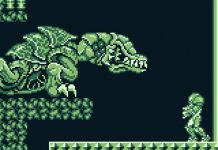
Samus Aran battles a Metroid boss in ‘Metroid II: Return of Samus’ for the Game Boy.Nintendo
Metroid II: Return of Samus would receive a positive reception from critics and audiences. Reviews praised the game for its improvement on gameplay established in the first Metroid game. By 2003, Nintendo managed to sell more than 1.7 million copies of the game worldwide. It helped with the rise of a new franchise for Nintendo, with Samus Aran appearing in more games in the years that followed.
A remake of Metroid II was released by developer Mercury Steam for the Nintendo 3DS in 2017, titled Metroid: Samus Returns. It featured the same story as the original, but the visuals and gameplay mechanics were redone and improved for a modern audience. It also added extra cutscenes to the game that tied directly into the Metroid franchise storyline, setting up the events of Metroid Fusion in dramatic fashion. To this day, Metroid II: Return of Samus is still viewed as an important game in the franchise, being the bridge to what is arguably the biggest release in the series to date.

This story was originally published by Men’s Journal on Nov 27, 2026, where it first appeared in the Entertainment section. Add Men’s Journal as a Preferred Source by clicking here.
Story via Tech Yahoo. Read the original article