





















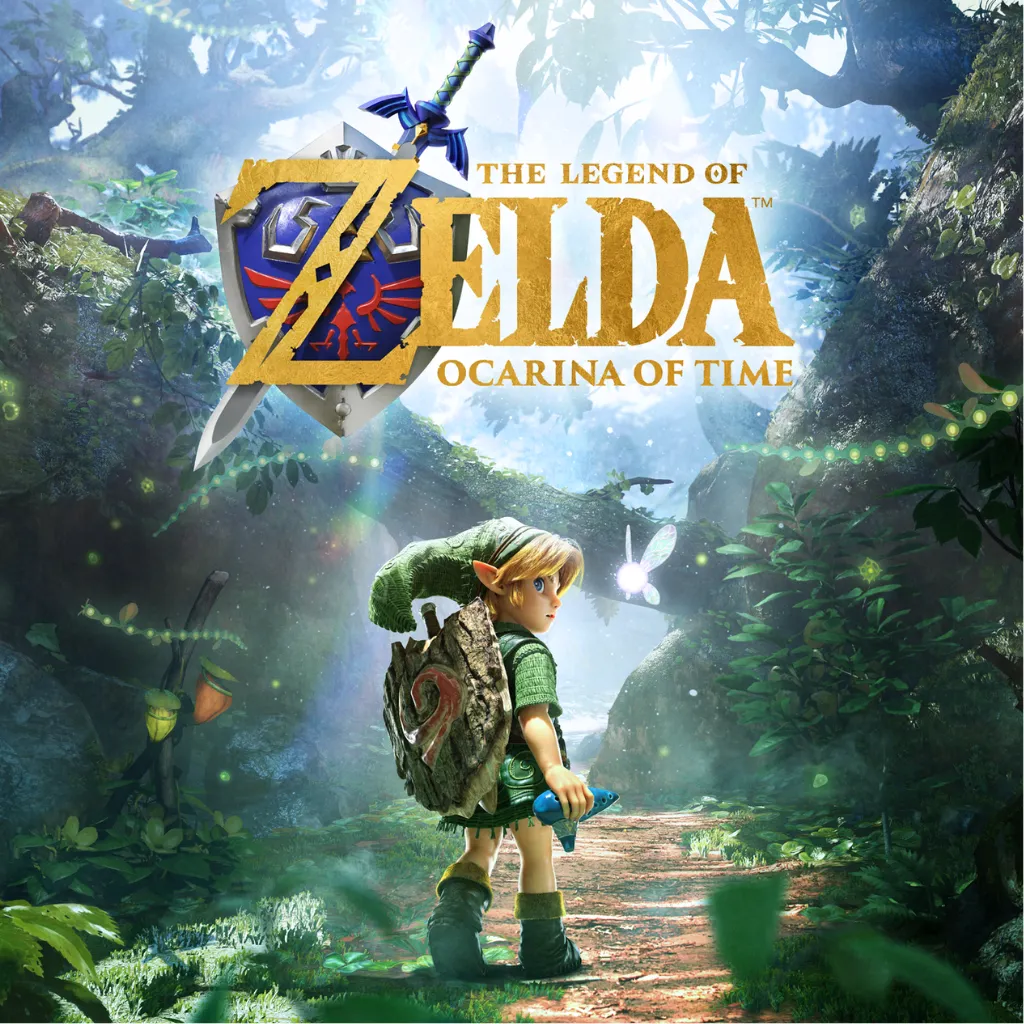
The Legend of Zelda: Ocarina of Time (2026)
Released: 5th November 2026
Developed and published by Nintendo.
The Legend of Zelda: Ocarina of Time is a video game that brings joy and nostalgia to many gamers across the world. I’ve heard it heralded by many fellow gamers and critics alike across forums for years that it is the greatest game ever made. It set the standard for video games to come and its impact on the industry has been felt ever since 1998.
My context for this game is a little bit different though. I first played Ocarina of Time via the Nintendo Switch Online Expansion Pass on my first Nintendo Switch in October of 2021. As I was coming from The Legend of Zelda: Breath of the Wild, I never really had the appreciation or the nostalgia for Ocarina of Time. I could not appreciate the impact of this title because I was jaded by clunkiness and outdated visuals. For older games I find that I had to grow up with them to have such appreciation, and Ocarina of Time was not one of those for me. I ended up quitting the game before I completed Goron City. From this perspective I can check out Ocarina of Time (2026) without rose-tinted nostalgia glasses and see whether the hype is as valid today as it was 28 years ago.
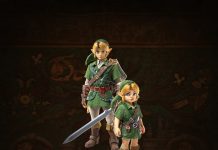
Ocarina of Time (2026) tells a story of destiny and adventure. You take control of Link, a child of the Kokiri forest entrusted with saving the kingdom of Hyrule. It’s a story that, for the most part, I was experiencing for the very first time. My limited engagement with the Legend of Zelda franchise meant that I could experience these characters and story beats without prior context. I was invested enough with the characters and story, which is accessible for all audiences whilst evoking the spirit of adventure.
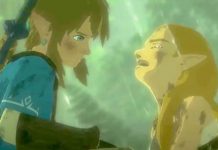
Link does stick out as a silent protagonist, surrounded by a colourful cast of allies and villains, like the mysterious Sheik or intimidating Ganondorf. The cutscenes are either exhilarating or poignant, and the overall goal of the story isn’t to be mature or clever. It simply gives you a reason to save the kingdom and be the good fighting evil. In-game events do showcase themes of growing up, and there’s a serious sense of darkness in some parts of this world despite the all-ages adventure. I won’t easily forget how dreadful the ReDead monsters are, for example.

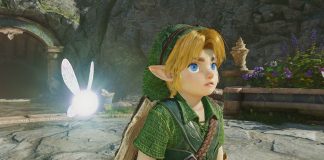
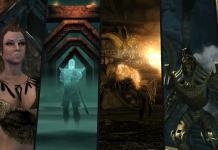
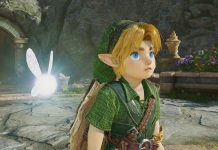
Ocarina of Time (2026) looks amazing. The art style was carefully considered to make each location feel distinctive and recognisable, and modern hardware allows for many tiny details to craft an expressive visual palette. Little touches that stood out to me include: ground-hugging fog that parts as you step through it, impactful and flashy effects from every sword hit, the seemingly endless bushes to cut down, and beautiful water effects. The rich detail on the dungeon interiors also stood out to me, and they each have their own identity while still retaining an intrinsic aesthetic that fits in the world of Hyrule.
This beautiful world is also fun to explore and fight your way through. Switching between tools is smooth, and the only reason you’ll need to access your inventory screen is to swap outfits for certain landscapes. As Link you will be jumping, hacking, blocking, and shooting the monsters and targets of the world. Every hit has real impact, and whether you’re using your childhood Kokiri Sword or the coveted Master Sword, you genuinely feel like a powerful conduit of destiny. Enemy variety is enough to keep you engaged, as each new landscape reveals new ways for things to attack you. Bats in Death Mountain are covered in fire, while bats in the frozen Zora’s Domain will freeze you as an example. This is in addition to the unique beasties that infect Hyrule’s locales.
The boss battles feel grandiose in scale, as the huge monsters attempt to destroy you with overwhelming force in David vs. Goliath-esque confrontations.
There are engaging environmental challenges to navigate too, such as lava, acid, and deep water; the tools you require to navigate these environments are provided at a considered pace too. Link never feels too powerful too quickly, and each addition to his toolkit feels thoughtful and balanced. Combat was a bit boring for my personal taste; however I recognise the wide audience this game reaches and the intent behind the encounter designs.

The level design is one of the real standouts of Ocarina of Time (2026). The developers are crafty with chest placement and with opening avenues of progression through small keys and doors. Each chamber in a dungeon has a purpose, and a way to propel Link forward using a newfound tool. There’s no wasted space and the layout of each dungeon feels intentional. After experiencing these levels firsthand, I understand why the level design of the 1998 title has been heralded as significant influences on modern video games.
I also love how each temple has its own identity, that which is created from a combination of traversal challenges, enemy types, and boss encounter. Even down to the colour palette, each dungeon feels so intrinsic and I wanted to explore every nook and cranny for every last rupee. No two dungeons feel like the same game, and each introduces fresh ideas that keep you curious about what’s next.
Time to shoutout the Water Temple. Its reputation as the nightmare dungeon of Ocarina of Time precedes it, and I went in bracing for the worst. In the remake it never became that. The water level controls are clearly marked on the map, so I always knew what I needed to change and where to go next. It’s still a proper puzzle, but a satisfying one, and I came out more impressed than annoyed.

Progression from dungeon to dungeon is fairly linear and forms the game’s golden path, but I love how much there is to do and explore at your own whim outside it. There are no main quests or side quests like in an RPG, but if you want to go and sell masks across the land or find the ever loveable and constantly lost Richard the dog you can do so. There’s minigames like shooting galleries and races to tackle too.
If you ever get lost though, one of the new features in Ocarina of Time (2026) include the Threads of Time. This acts almost like a quest log that gives you enough guidance to expand your adventure. I’ll admit it, the new Threads of Time saved my ass when I was stuck trying to find the Lens of Truth. I knew I had to traverse a tight passage at the bottom of the well in Kakariko village, but in Adult form this wasn’t possible. A Thread of Time pointed me towards Sheik at the Temple of Time to catch him up with my progress, which gave me the nudge I needed without handing me the answer.
The old-school spirit of exploration intact while making sure frustration isn’t prevalent, especially in an era of endless map markers and checklists overwhelming modern video game audiences.
My experience was also enhanced by the Zelda Notes app. I like to be a collector in games, and this is one where 100 percent completion is both accessible and enjoyable. I used the app on my Samsung Galaxy Z Fold 8, which gives me a full-screen view of a live map showing collectibles in my area. It’s fully customisable: you can hide what each chest contains, as well as the requirements to reach it, so nothing is spoiled. If I can’t yet access a Gold Skulltula or a chest, the app doesn’t reveal how. A rocky pile blocking a doorway can be destroyed with bombs, for example, It’s an assumption I could have made, but neither the game nor the app tells me until I have bombs in hand. I found it a particularly useful companion piece, but it is not a requirement for your playthroughs by any means.

An aspect I’ve been enjoying regarding Ocarina of Time (2026) is people on social media re-experiencing old discoveries. If you smack the Cuccos too much in Hyrule Castle Town, they’ll bombard you until you die, for example. I never would have thought to try that, because I wasn’t a kid when I played the first game, and it’s not a thought that occurs to me at 29 years old. I do wish I could have found these secrets on my own, but I think it’s a wonderful way to reflect on the exploration that Ocarina of Time (2026) invites from modern audiences. Whether you’re experiencing comedic easter eggs for the first time, or unravelling the story with fresh eyes like myself, the sense of exploration just sits with you.
It’s truly wholesome to see more people experience this as the game is in the wild. The exploration come from an era when things weren’t clearly outlined for you, and you needed real motivation to uncover the world’s mysteries. That bit of design magic helps to make the remake so special, and it helps me appreciate what makes the original so special too.
It also helps that the game runs like a dream.
I experienced a consistent 60fps in both handheld and docked sessions. The only visual hitch I noticed was a slight frame tear in Gerudo Valley, but it was minor enough to leave no impact on my experience. This is a true testament to what developers can accomplish on the Switch 2 hardware when a title is designed from the ground up for the console.

The Legend of Zelda: Ocarina of Time (2026) is a gorgeous, brilliantly designed return to Hyrule that stands on its own as a game while honouring one of the most influential titles of all time. It pairs the original’s legendary level design with modern touches, and a stunning visual facelift that respects the artistry of the original game. Whether you loved the original or are new to The Legend of Zelda franchise, The Legend of Zelda: Ocarina of Time (2026) is an absolute must play for Switch 2 owners.
Rating: 9/10
Review by Tyler Lubke.
* Game copy purchased by reviewer.
The Legend of Zelda: Ocarina of Time (2026) is available now via Nintendo. Pick up your copy here.
Story via Wallofsoundau. Read the original article