






















For decades, Paper Mario fans have longed for a return to the classical turn-based, badge-swapping mechanics of the first two games, which Nintendo abandoned after the GameCube era. Aiming to recapture the nostalgic charm of Paper Mario: The Thousand-Year Door, the team at WildArts worked to replicate its iconic 2.5D visual style while evolving the formula into a more open-world design that promotes free exploration.
Indies often try to recapture the magic of games they grew up with, and while some are legitimate hits, many end up as cloying fan games that lack the originals’ panache. Does Born of Bread escape this tired curse? Or does it need to go back in the oven?

Born of Bread is a comedic fantasy about ancient, time-traveling demons. Its core premise is actually a clever homage to Carlo Collodi’s The Adventures of Pinocchio. The story follows Loaf, a sentient bread golem accidentally created when a royal baker mixes together a mysterious recipe. The parallels to the classic Italian fairy tale are handled with a refreshing touch of restraint. Instead of beating the audience over the head with overt references, the narrative lets the symbolism do the heavy lifting.
Loaf is a completely naive, blank-slate creation thrust into a complex world he does not understand, mirroring the innocence of a newly carved puppet. The emotional anchor of the story rests on the endearing relationship between Loaf and his creator, Papa Baker. After he’s wrongfully accused of a crime and separated from his metaphorical son, the ensuing quest becomes a rescue mission driven by unconditional love. This thematic echo of Geppetto’s search for his missing boy gives the whimsical, joke-heavy script a grounded, heartwarming core. Later narrative beats, including encounters with gargantuan beasts that evoke the imagery of Monstro the whale, further reward players who are familiar with the original fable.

The humour is surprisingly not annoying. The tendency with indie games like this is to whallop gamers over the head with an endless stream of incessant gags, puns, and pop culture references, but Born of Bread shows a bit of restraint. The narrative, while not without its jokes, does take itself seriously enough so that there are some legitimate stakes at hand.
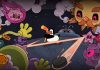
Naturally, with a game like this, it’s impossible not to bring up Paper Mario and how it utilised 2D characters set in a 3D pop-up-like world with mini-game-style battles. Just like in Nintendo’s series, Born of Bread plops paper-thin, flat characters into richly layered 3D environments. This aesthetic choice is executed with immense polish, boasting vibrant lighting, crisp textures, and a smooth framerate that elevates the hand-drawn art style. Art-wise, character designs evoke a the mid-2000s Cartoon Network charm. Everybody has distinct and memorable silhouettes and defined personalities baked (har har) into their designs.
Every environment, from bustling castle kitchens to mysterious forest depths, feels like a living pop-up book. The visual fidelity ensures that the world feels tactile and cohesive, avoiding the cheap, fragmented look that sometimes plagues lower-budget indie titles attempting a similar perspective flip.

The game’s visual flair carries over into its turn-based gameplay, marking it as a standout feature with more depth than the titles it draws inspiration from. Born of Bread shakes up traditional role-playing combat by ditching passive, menu-driven routines in favor of active, engaging mechanics.
Every attack, defense, and special move calls for player involvement, with quick-time events requiring precise button presses, rhythmic timing, and swift joystick motions to deal maximum damage or expertly block enemy strikes. It’s an engaging system that has a bit of a tug-of-war tension during its best battles, keeping players on their toes, while never becoming overwhelming for kids to enjoy. It categorises various weapons and skills by unique elemental types, forcing careful tactical planning during encounters. Managing a pool of Will Points for special moves and Boon Points for passive bonuses creates a satisfying loop of resource management.

The combat is presented through a clever framing device: a simulated livestream audience. Actions taken during battle directly influence the hypothetical viewers watching the fight. Pleasing the crowd by executing perfect inputs or utilizing varied strategies replenishes valuable combat resources, adding a compelling layer of spectacle and meta-strategy to every standard skirmish. Battles feel snappy, ensuring that grinding never feels tedious and every victory feels earned through active skill rather than statistical superiority or mindlessly selecting the same attacks.
As polished and as enjoyable as Born of Bread is, it isn’t without its drawbacks. The inventory has severely low capacity. It’s easy to quickly run out of space and force Loaf to offload items to make room. The combat, while initially engaging, can become stale and repetitive due to spongy enemies, difficulty spikes, and a severe restriction on strategic depth, such as the inability to switch partners mid-battle. It’s a pretty streamlined RPG, running just under 20 hours, which makes its flaws all the more noticeable when they start to show.

Story via Cubed3. Read the original article