






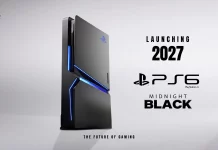












Physical media is on its way out. Sony is dropping disc support in 2027. The physical version of Grand Theft Auto 6 will be a code-in-a-box. And it sounds like Xbox won’t be supporting physical games for much longer. But what about Nintendo? While physical releases for the Switch 2 don’t seem to be ending anytime soon, the company has its own controversial half-measure: game-key cards.
If you’re shopping for a new Switch 2 game, you need to be aware of game-key cards. You may already know that Nintendo’s console supports regular game cards, where the game files are stored on the physical cartridge, but game-key cards are different, since they don’t actually contain the full game data. It’s confusing, for sure, but here’s what you need to know before buying Onimusha: Way of the Sword, Resident Evil Requiem, or another big-name game.
What Is a Game-Key Card?
As Nintendo explains, game-key cards are “your ‘key’ to downloading the full game to your system via the internet.” They come in a case and include cartridges that slide into the Switch 2, just like any other physical release. However, you’ll be shocked to learn that you need an internet connection to download the game’s files before playing for the first time.
It’s worth noting that game-key cards don’t need a continuous connection to play after the initial download, but the card does need to be inserted into the Switch 2. Additionally, these game cards aren’t tied to a Nintendo account, so you can use them on other Switch 2 consoles or lend and resell your games. But the question remains: Are these truly physical games? Many have criticized Nintendo for devaluing physical media, leading the company to poll players about their feelings on the game-key card.
I’m sure you’re wondering why this even exists, right? Switch 2 cartridges top out at 64GB, but they’re expensive for the publisher to use, so game-key cards will help get games into physical stores for a lot less money, Nintendo tells The Verge. However, this also means games like Puyo Puyo Tetris 2S—which is all of 4GB on Steam—are game-key cards because no one wants to pay more for storage they don’t need.
 (Credit: Nintendo)
How to Tell If You’re Buying a Game-Key Card
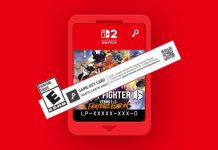
Nintendo provides a helpful indicator on the box, but I needed to squint to read it. As illustrated in the image below, the case shows the game’s rating in the bottom-left corner. Next to that is a key logo and the words GAME-KEY CARD. In very, very small print, it also says how many gigabytes of free space you need and a note: “Full game download via internet required.” Crucially, there’s a small key icon on the cartridge itself, which might not help you now but would be useful if you’re looking to buy a used game without a case one day.
 (Credit: Nintendo)
While I think we’ve moved beyond the days when confused parents couldn’t tell the difference between the Wii and Wii U, Nintendo notes the Switch 2 “supports both regular game cards and game-key cards,” which I think still leaves some room for consumer confusion. If a publisher opts to use the game-key card format, there won’t be a separate “true” physical release (at least not yet), but I fear folks might still grab a game off the shelf in Target only to get home and realize it’s a game-key card.
But does it matter? In the end, the game will still “be there,” but if physical media matters to you, I can see this being a deal-breaker. Can you imagine buying a title before a long plane ride, only to realize the game won’t load because you’re not connected to Wi-Fi? If a game is on the cart, it can be theoretically played forever. If you need an internet connection to download the game, I worry what will happen when those servers go offline one day.
Which Games Are Game-Key Cards?
Many publishers have decided to use the game-key card format. This is allegedly because Nintendo only offered third-party developers the 64GB cartridge or the game-key card at launch—there was no smaller, standard physical cart. This would explain why nearly every major AAA release (and even some smaller games) is on a game-key card, since publishers don’t want to pay extra for the more expensive storage space. Here’s a list of games that are on a game-key card if you’re trying to buy physical:
Each of these games will require an internet connection to download before playing. It’s also worth noting that titles like Call of Duty: Modern Warfare 4, Diablo IV Age of Hatred Collection, Civilization VII, Split Fiction, and Tony Hawk’s Pro Skater 3+4 are actually only a code in a box. Even Nintendo is getting in on the act with Pokémon Legends: Z-A – Mega Dimension DLC. Bethesda’s Fallout 4: Anniversary Edition and Skyrim Anniversary Edition were game-key cards, but Oblivion Remastered and Indiana Jones and the Great Circle received proper physical releases.
 (Credit: PCMag / Target)
Just be careful before buying online—I’ve seen at least one game show no Game-Key Card on one site, but feature it on another. Others are noticing as well, since “temporary” box art for pre-orders can lack the game-key card labels. I recommend checking multiple sites and reading through the product description to be sure. If you’re truly dedicated to physical releases, one workaround I’ve seen discussed is buying the physical Switch 1 version and upgrading it to the “Switch 2 Edition” version after the fact.
Nintendo seems to be banking on a lot of AAA releases heading to the Switch 2, including Final Fantasy 7 Rebirth and Elden Ring, both of which feature pretty hefty file sizes. That said, Cyberpunk 2077‘s devs managed to fit the game on a 64GB cart, and Bethesda switched to a true physical release for Oblivion after announcing it as a code in a box, so I think more physical releases can have the full game on the cart.
It’s also worth noting that smaller games are still vital to filling out Nintendo’s catalog. To that end, 16GB and 32GB game cartridges have been rumored to exist since at least December, and Stellar Blade’s Switch 2 release may be the first to explicitly mention a 32GB game card. If Nintendo has given publishers additional storage options, it might not mean that game-key cards are going away, but more options are a good thing, both for publishers and consumers. Given that PlayStation is dropping physical media, and Xbox isn’t likely far behind, Nintendo’s half-measure might soon be all we have.
Story via Uk Pcmag. Read the original article