


























High Times is an interesting prospect, combining the allure of a dating sim with the coziness of a cooking game, and on first look, it appears to offer the perfect recipe for both. High Times is a strange mix though, with a flavour profile that occasionally leaves a sour taste in the mouth.
The opening of High Times sees you meeting a mysterious figure at a bus stop, but I was immediately thrown when I accidentally skipped the section and then was unable to revisit it. This frustrating moment foreshadowed much of my experience to come.
High Times begins properly when you design your fictional avatar for this romantic culinary voyage. In truth, the options are limited, and for me they resulted in the creation of something that reminded me of the more human-looking muppets. The game might have been better served by having a few pre-designed options, as you spend much of the game staring at the face of your monstrosity during conversations with clients.
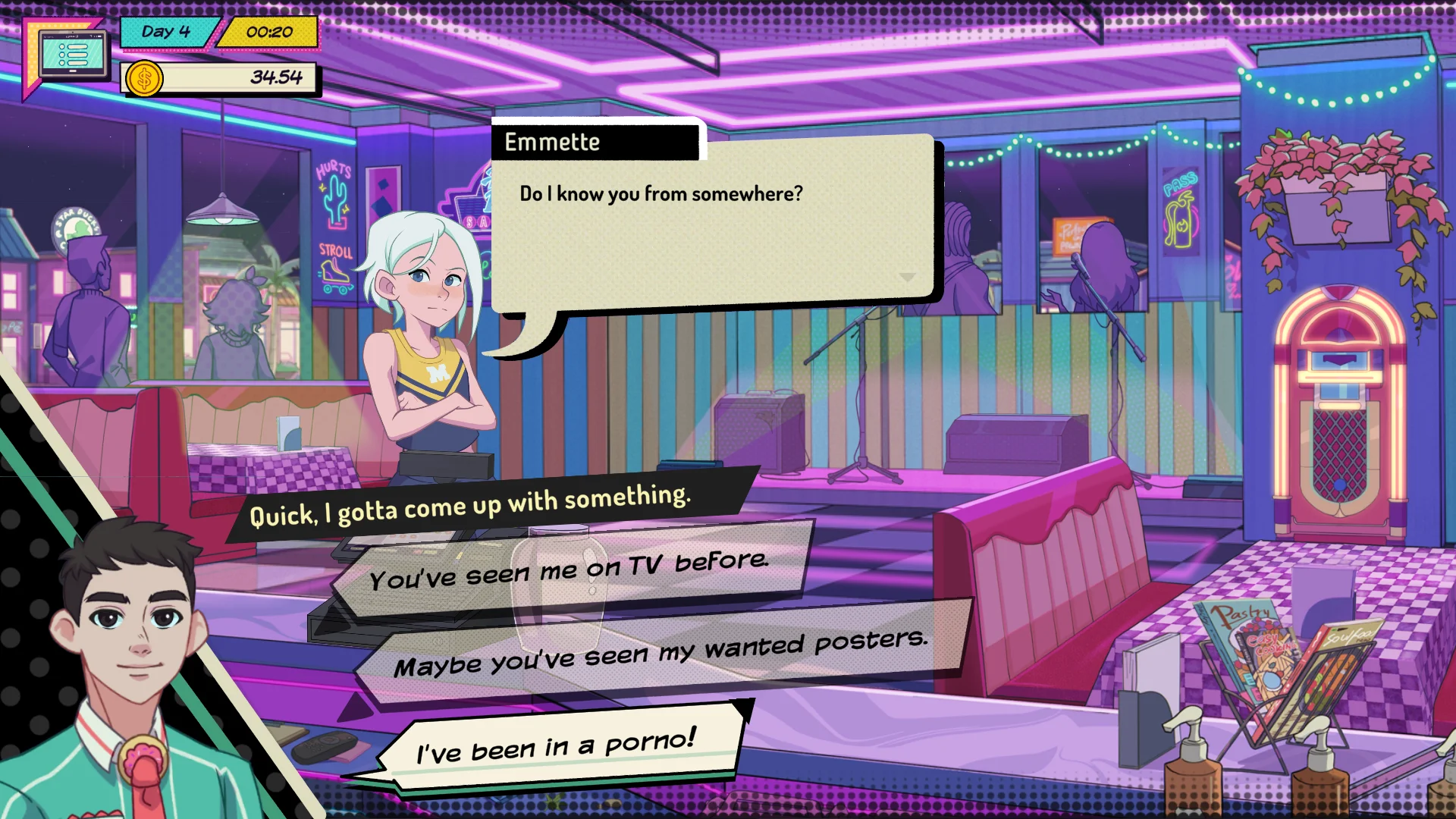
Multiple ingredients combine in High Times‘ gameplay from the outset. You work at the Hot Box, a doughnut shop that serves mood-altering treats to the citizens of the fictional city of San Mazo. Most of what you know of San Mazo comes from the conversations you have with your customers and the limited view out of the window of the store, which shows a neon-drenched landscape. High Times often drops indications that we are in the near future, where some of the more unfortunate problems facing our present day are starting to come to pass, such as the disastrous effects of man-made climate change.
Through a quirk of fate, several of your exes gravitate to San Mazo and your little corner of it, making their way into your presence one at a time. As they do, you enter into conversations with them, selecting dialogue choices at key points, which can lead to romantic outcomes if you pick specific options. Choose differently, though, and your relationship might remain platonic, or even turn for the worse. Multiple other non-romanceable denizens of San Mazo’s night-time scene also visit you, each with their own stories to tell.
Your task is to make everyone delectable, fried confectionery, which forms the main gameplay loop. When the time comes to compose your sugary masterpieces, you start by choosing from different shapes, flavours, and toppings. Your initial options are limited, but they build over time. You have access to a recipe book, which gives you precise instructions for how to produce each doughnut, although sometimes it is better to just freestyle as you please.
The initial cooking stage is almost impossible to accidentally fail. The challenge lies in decorating the doughnuts, which requires light touches on the control stick if you want to perfectly add the drizzle designs that customers sometimes request.
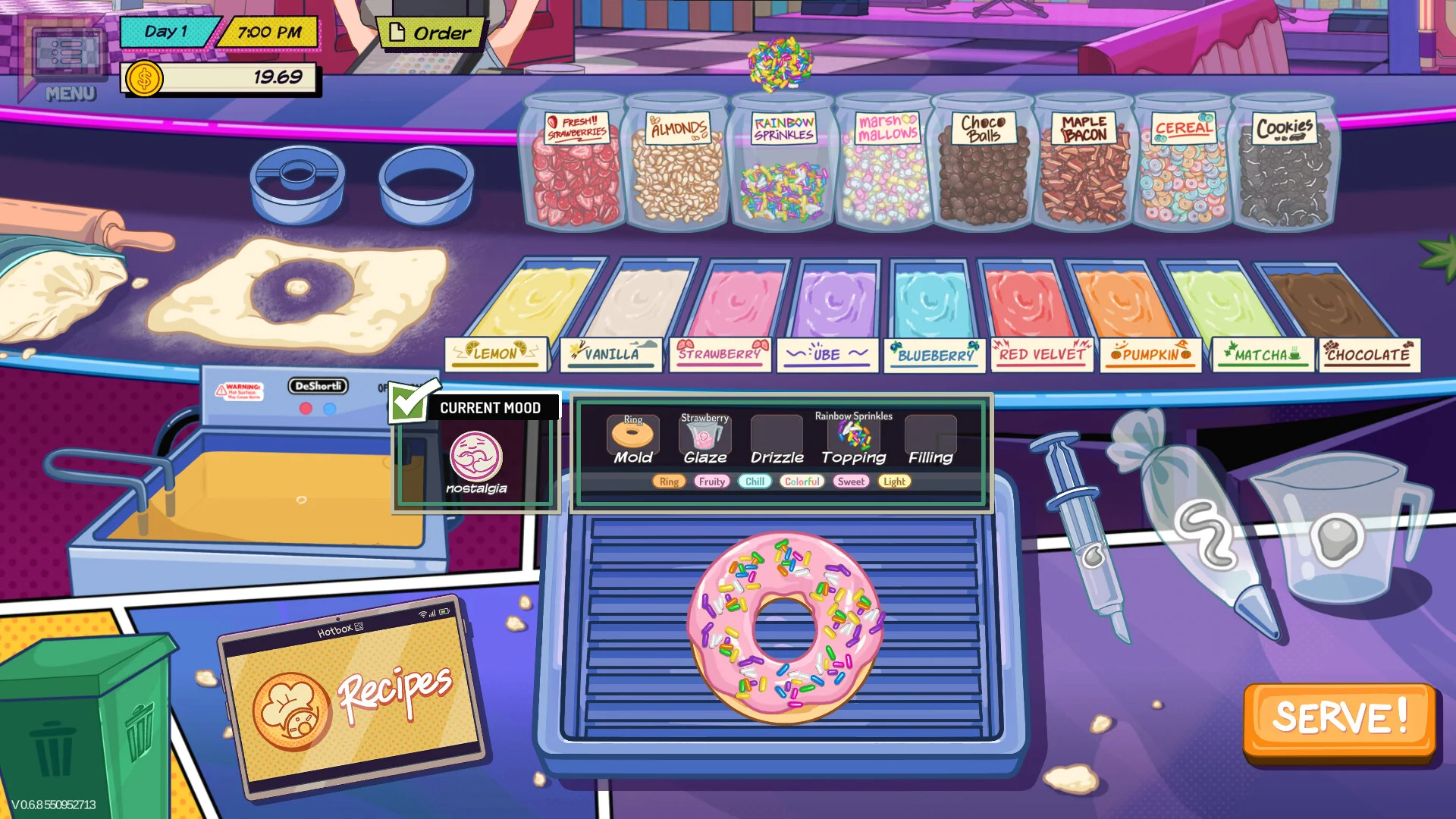
I don’t mean to be salty, but High Times altered my mood from the start, and not for the better. High Times does little to tell you what the controls are, requiring trial and error to discover them. It also has more bugs than a sweet treat left on a kitchen counter in the summer. Selecting a doughnut mold frequently proves to be impossible, and requires that you flick in and out of the menus to unfreeze the cursor.
The doughnut selection screen is equally laggy, often taking several seconds to react to inputs—not something I would expect from a mechanic that is hardly going to be majorly taxing the resources of the system. These hitches can cause you to make costly mistakes, which you then have to place in the bin. This is frustrating, as ingredients cost money, and you fall in danger of going into debt if you do this too often.
When engaging with this jankfest, you’re not merely trying to match flavours with your clientele’s desires; you are also attempting to influence their emotions, as the donuts contain “mood enhancers.” These are psychotropic substances which have several effects, such as increasing sincerity, making your visitor more honest than they otherwise would be, or adding passion, which stokes their internal fires of enthusiasm. As your customers mostly ask you for specific moods, this mechanic never completely sold me, and I rarely considered myself to be fully in control of the choices I made for my visitors.
The designs of your potential paramours and the other assorted characters who visit the hotbox are much better than they are for the player’s representative. They have the feel of an upmarket webcomic, sitting somewhere between anime and realism, and neatly capture the internal qualities of each individual. Your ex MJ with her green hair, flannel shirt, and band t-shirt looks like she’s stepped straight out of a 90s daydream. In fact, there’s more than a little musical nostalgia about several of the characters, with Kolt closely resembling Kurt Cobain, if he spoke like a surfer-dude and was much more irritating. Ainsley is an obvious Avril Lavigne clone, confirmed by her frequent quotes drawn from Lavigne’s catalogue of hits.
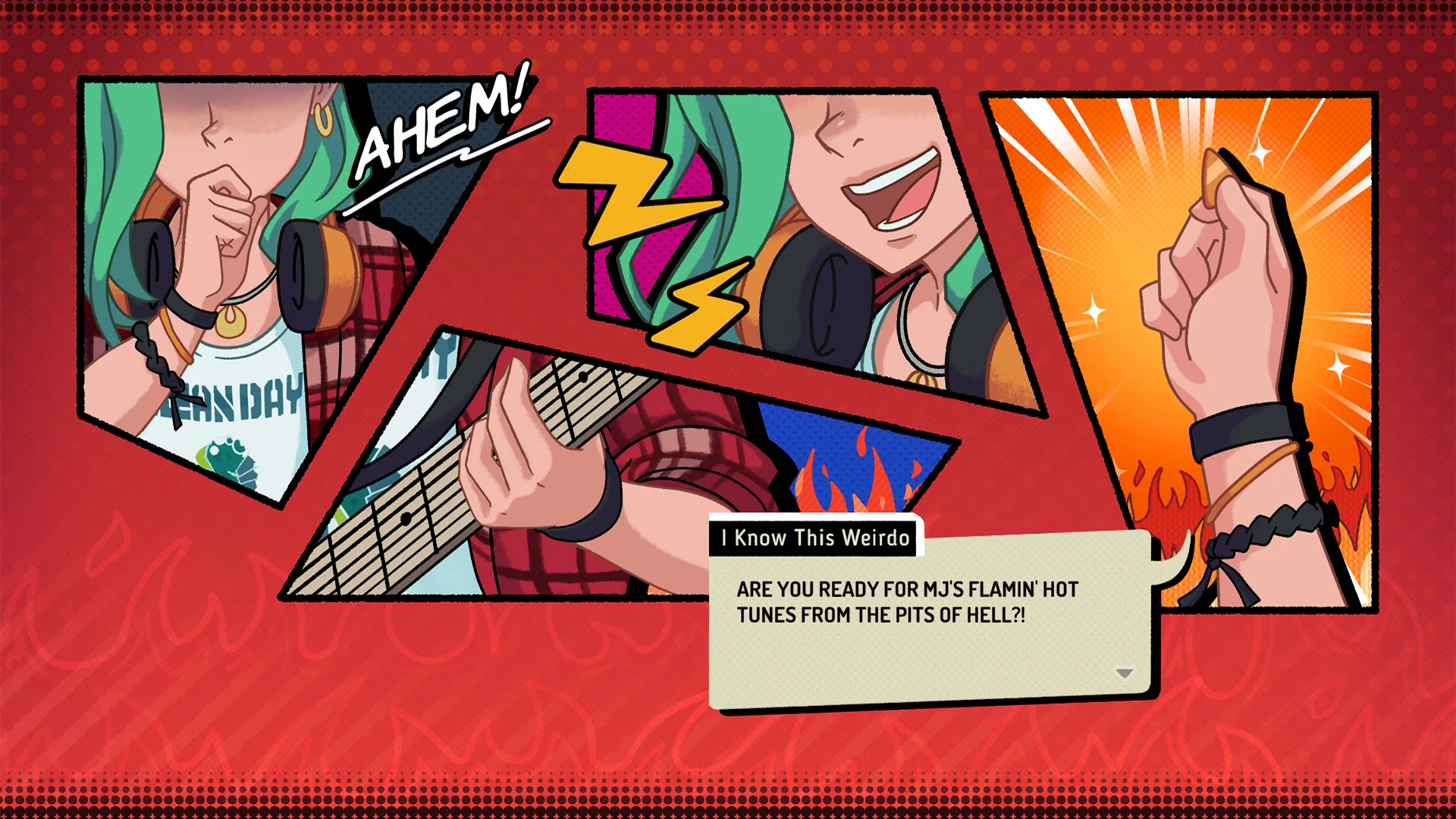
The music of High Times isn’t anywhere near as rocking as these inspirations. It consists of a number of relatively short pieces designed with tonal variation in mind, but which I couldn’t identify if I heard them playing on the radio, despite spending many hours listening to them. They’re by no means offensive, just bland. In a game where you’re essentially stuck in one location, a good soundtrack becomes even more crucial, and as music goes, this sonic mix lands on the floor.
High Times is not completely unpalatable, though. If you were tempted in through the door by its delicious looks, you’ll eventually find some sweetness to its storylines. My initial impression was not good, as a few of the characters grated on me. For example, Connor is the plain “vanilla” romance option, the joke being that he is quite dull, with the unfortunate consequence being that he is genuinely boring. Another flame, Harry, is deliberately obnoxious, and I dreaded his appearance. Riri is a woman permanently dressed in a chicken suit—I’ll let that sink in a moment. She has a hideous faux-European accent and talks incessantly about poultry.
Still, as I progressed, I found to my surprise that the narrative’s aftertaste became more pleasant. Riri’s story evolves into a tale of the burdens of responsibility weighed against personal desires, and her squeaking voice began to endear itself to me as time went by. Characters I would usually imagine myself detesting sometimes surprised me, such as dancing influencer Stacy, with her nuanced tale focusing on how life can draw you off course if you lose concentration, and how difficult it can be to right yourself when that happens. She’s also the only one of your exes to be a one-night stand, giving her a different dynamic to your other former loves.
Also, if you value representation in your games, High Times has a full menu. The obvious starting point is the fact that your exes are both male and female, signalling that queerness is central to the experience. The character designs are multi-racial and cover a wide range of lifestyles. There are many occasions where the inner lives and interactions of this group are genuinely thought-provoking, fueled by several high-quality vocal performances which add nutritional goodness to High Times’ text. They do occasionally sound like they were recorded inside a fridge, though.
Even so, there are several things I encountered whilst playing on the Switch 2 that I just cannot forgive. The principal issue is the appalling instability of the game, leading to multiple crashes. The manner of their occurrence is especially galling. At the end of each game day, you go behind the scenes with the opportunity to read social media posts and texts from your contacts, or order items online, such as new equipment and flavours, songs for the jukebox, or bits and pieces for the shop. You can then enter a screen where you decorate the Hot Box, and depending on what you choose, you can increase or decrease the chances of an individual visiting you.
Whenever I did this, almost without fail, High Times would fall over, totally cooked. What is worse, you can’t save the game until you have gone past this section, meaning that each time this happened I lost an entire game day of progress. Eventually, I avoided the screen altogether, locking me out of some of High Times’ key features. Crashes aren’t limited to this scenario, and other frustrating bugs exist, such as characters getting locked into a Groundhog Day-like loop during key interactions, where they repeat the same sequence endlessly, delaying progress towards any of High Times’ multiple endings.
In its current state, I couldn’t recommend investing time into the Switch version of High Times. If work were put into shaping it into something more consumable, it would hold more appeal. However, in the selection box of games we are offered nowadays, it would be unlikely that I would ever pick this one to satisfy my needs.
Story via Rpgfan. Read the original article