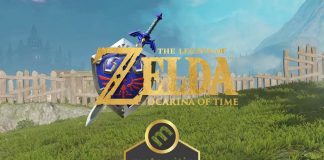





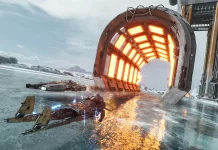
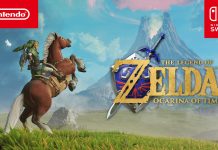










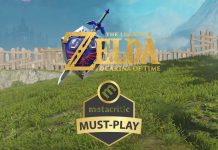


A static recompilation build of The Legend of Zelda: Ocarina of Time Remake has surfaced on PC within days of the game’s launch on Nintendo Switch 2, running at 60 frames per second on an ultrawide display with only minor visual artifacts, according to Notebookcheck. The catch is hardware appetite: the port leaned on 18.6 GB of VRAM from an NVIDIA GeForce RTX 5090, a card that launched at $1,999 and has since climbed to about $9,400 at the cheapest US listing as memory prices surged through 2026.
The demonstration, shared by @chasmmmmmmmmmmm on X and @tangerineturtle1 on GitHub, drew claims from its poster that “hardware exclusivity is over” and that the feat spells the end for Nintendo. That framing drew a sharp rebuttal from the outlet covering it, which argued the economics do not support the hype: a Switch 2 plus a legitimate copy of the game costs under $600, against $2,000-plus for the PC hardware needed to match it.
The cost gap has widened since that assessment. Every card in NVIDIA’s RTX 50 series now sells 40% to 120% above its US MSRP, and the flagship 5090 has fared worst: a Q4 2026 TechSpot survey of retail listings put the cheapest US card at about $9,400, roughly 4.7 times its $1,999 launch price. Japanese buyers face a similar premium, with the cheapest in-stock listing at about ¥1.2 million in early November and a prebuilt desktop using the card listed near ¥1.34 million. The Switch 2 side has risen too — Nintendo lifted the US price from $449.99 to $499.99 on Sept. 1, 2026, citing market conditions — but by a fraction of the GPU’s increase. At current levels the graphics card alone costs about as much as 17 Switch 2 consoles with the game in the US, or 18 in Japan.
Static recompilation differs from conventional emulation. Rather than interpreting the original console’s machine code instruction by instruction, the technique translates a game’s binary into native code that runs directly on PC hardware, which can yield smoother frame pacing once the translation is complete. The approach has gained traction in preservation circles in recent years, though it typically requires the original game files to function.
The coverage also pushed back on the idea that Nintendo software arriving on PC is novel. Major first-party titles have been playable on computers around launch since Super Mario Galaxy 2 in May 2010, the report noted, and Nintendo’s console business has continued to post strong results regardless.
| Metric | Figure |
|---|---|
| Frame rate in the recomp build | 60 FPS |
| VRAM consumed on an RTX 5090 | 18.6 GB |
| Switch 2 plus a legal copy, US | $559.98 with the digital edition |
| Switch 2 plus a legal copy, Japan | ¥67,960 with the download edition |
| RTX 5090, cheapest listing | About $9,400 in the US, about ¥1.2 million in Japan |
Note: Console and software figures are Nintendo’s suggested retail prices in November 2026. US console pricing reflects the Sept. 1, 2026 revision; Japanese prices include tax and use the Japanese-language Switch 2 system. Graphics card figures are the lowest listings found in Q4 2026 retail surveys and checks.
The remake itself has been well received. It scored 96 on the review aggregation site Metacritic, the highest mark among major releases this year, according to Yonhap’s gaming column. The Korean-language review described a project that preserves the 1998 original’s dungeon layouts, item and enemy placement, and puzzle solutions almost intact, while modernizing controls and presentation: a free-rotating 360-degree camera, unrestricted jumping, item handling borrowed from Breath of the Wild, and seamless transitions between outdoor areas and building interiors without loading screens. Full voice acting now accompanies key story scenes, and the Switch 2’s graphics hardware is pushed with real-time lighting, water reflections and foliage that reacts to movement.
Not every change is cosmetic. Beds that let players switch between day and night have been added to villages, and the Great Fairies who once taught skills for free now charge rupees, mirroring their role in Breath of the Wild. The review also flagged that the fidelity to the source material cuts both ways: players already familiar with the original, or with the 3D action vocabulary it helped establish, may find the remake simple by modern standards.
The enforcement campaign has unfolded in stages:
For Nintendo, the episode lands in familiar territory. The company has long pursued emulation and piracy of its catalog through legal channels, and a technically impressive but hardware-hungry PC build is unlikely to dent demand for a title that has already posted the year’s strongest review scores. The practical barrier for most players remains the price of the GPU, not the availability of the software.
The coverage was blunt about the ethics as well, arguing that piracy of newly released games undermines the case for legitimate preservation work even when it does not visibly slow Nintendo’s sales. “For the love of God, buy your games if you want to see more like them,” the report said.
Story via Finance Biggo. Read the original article